In shortLake Louise is blue because moving ice grinds bedrock into fine rock flour, and meltwater carries that sediment into the lake, where it stays suspended and refracts sunlight into turquoise. Glacial till carried in meltwater is what the official explanation points to, and it is the reason glacier-fed lakes across these valleys read blue or green rather than clear. The load arrives in spring and early summer, so the colour builds after the thaw in early June and holds through summer.
1,731 mElevation of the lake
70 mDepth below the surface
Early JuneUsual start of the thaw
Mid-DecemberLake normally freezes solid
Why is Lake Louise so blue
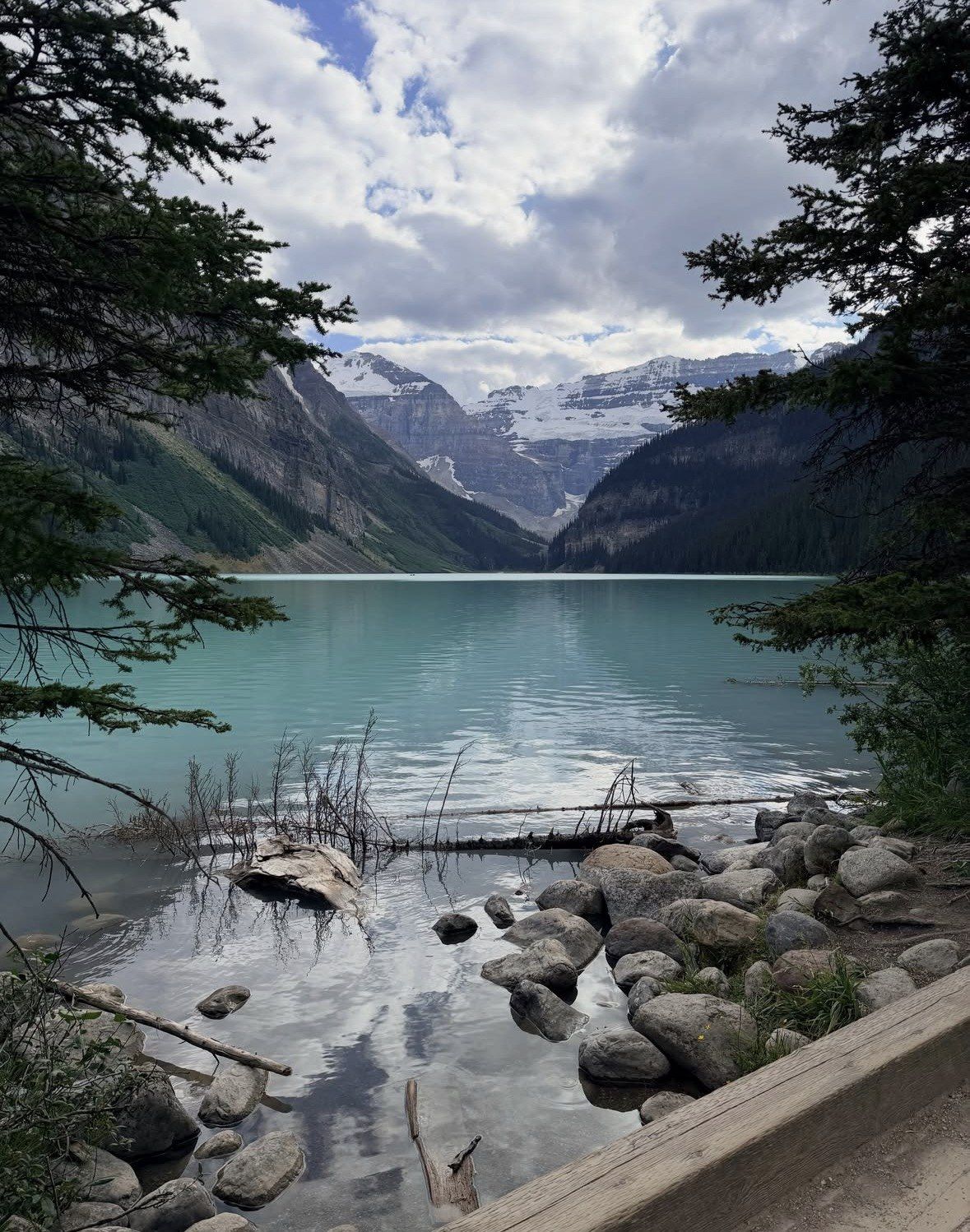
The colour is suspended rock. Mount Victoria stands at the head of the valley with its hanging Victoria Glacier, and ice moving over bedrock grinds that rock into a powder fine enough to stay afloat in water for a long time. Meltwater carries the powder, usually called rock flour or glacial till, down into the lake. Parks Canada credits the blue and green of glacial waters to exactly this material, and the tourism board describes the fine rock flour at Lake Louise refracting sunlight into the turquoise people come to see.
Sunlight entering the lake hits millions of these particles instead of passing straight down into 70 m of water. The particles send light back out, and the wavelengths that survive the trip are the blues and greens. Change the amount of sediment and you change the shade: a heavier load pushes the lake towards opaque milky turquoise, a lighter load towards a deeper blue-green.
Nothing is added to the water and nothing is dyed. The lake is about 2.4 km long and sits at 1,731 m, and the whole effect depends on a glacier upstream still delivering ground-up rock into the inflow.
When is Lake Louise most turquoise
Peak colour follows the delivery schedule of the sediment: the load reaches the lakes in spring and early summer, and the azure can then be expected to hold right through the summer. That timing is tied to melt: more melt means more meltwater, more meltwater means more rock flour in suspension, and the colour deepens as the warm months run on.
Lake Louise sits high enough that it usually only begins to thaw in early June, while lower lakes in the valley thaw mid to late May. A trip in the first half of May can easily find white ice instead of turquoise. Count the colour out from around mid-December, which is when the Fairmont Chateau Lake Louise reports the lake usually freezes solid as temperatures hold below zero, and nothing turquoise comes back until the thaw.
Daytime averages track the melt, so the month you pick tells you roughly how much rock flour is in the water.
| Month | Average day / night at the lake | What the water is doing |
|---|
| May | 13 C / -1 C | Lower lakes thaw mid to late May; Lake Louise often still ice |
|---|
| June | 17 C / 3 C | Thaw usually begins early in the month, sediment load building |
|---|
| July | 21 C / 5 C | Warmest month at the lake, melt at its strongest |
|---|
| August | 21 C / 4 C | Same daytime average, colour holding through the month |
|---|
| September | 15 C / 0 C | Days dropping away; larches hit peak colour in the final week of the month |
|---|
| October | 8 C / -5 C | Melt slowing as nights sit below freezing |
|---|
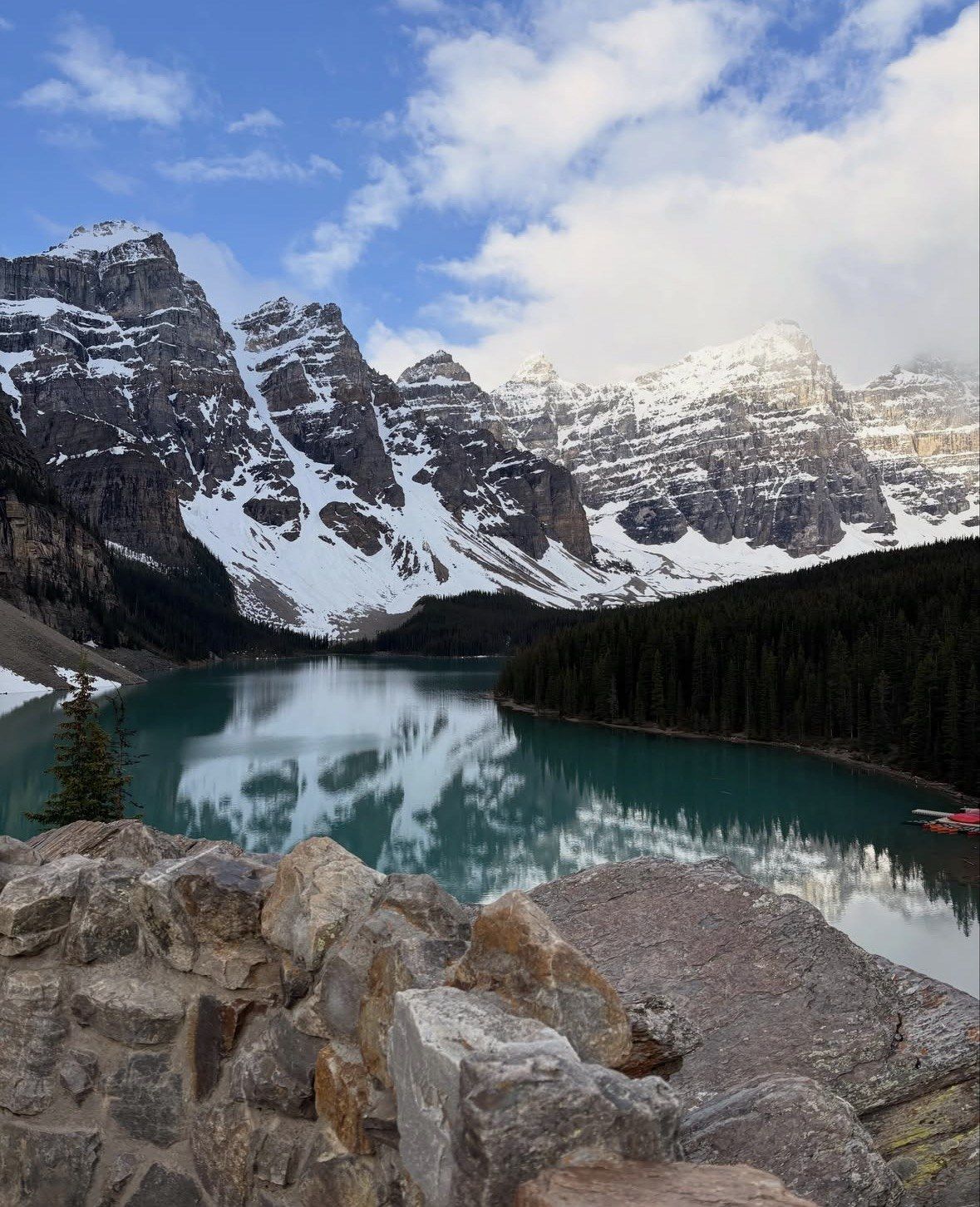
Moraine Lake before the light lands on the water
A 7-hour small-group departure with a guide trained in photography, rated 4.9 ★ (312 reviews), from CAD 400, that puts you at Moraine Lake while the valley is still quiet and brings you back to Lake Louise as the sun climbs onto the turquoise.
★ 4.9/5 · 312 reviews
How the light and the wind change the colour
The colour shifts with the light through the day, so two people can photograph the same shoreline hours apart and come away with different lakes. Light has to get into the water before the sediment can send it back out, which is why a high sun does more for the colour than a low one.
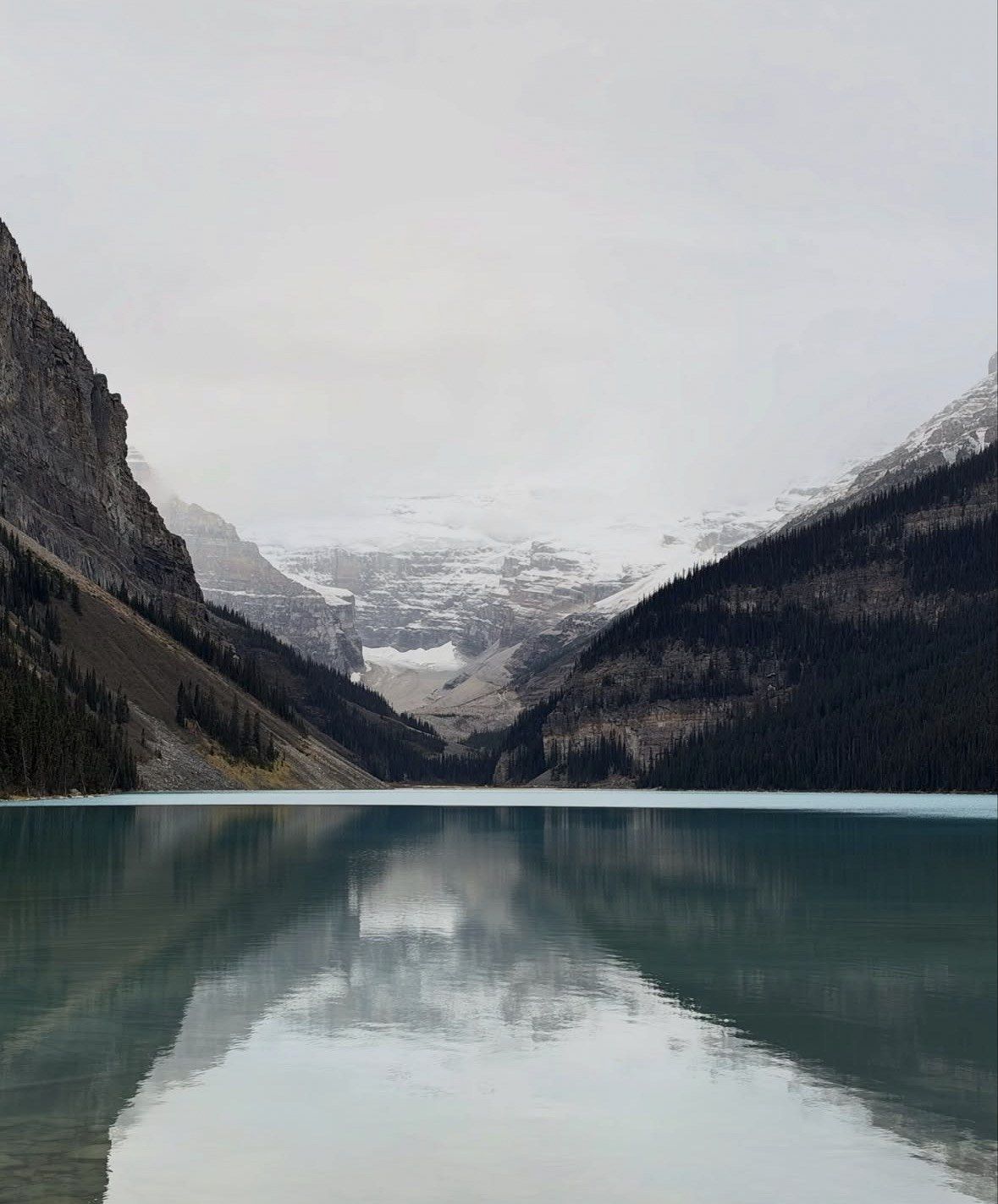
At first light the sun has not yet cleared the ridge at the end of the valley, and the lake sits in shade. You get stillness, reflections and the first light landing on Mount Victoria, which makes a good photograph of a mountain and a quieter photograph of water. As the sun climbs and lands directly on the surface, the turquoise saturates. Heavy overcast flattens it towards grey-green, because less direct light reaches the sediment.
Wind matters more than most visitors expect. A ruffled surface mirrors the sky back at you and hides the colour, and the turquoise only returns once the water settles.
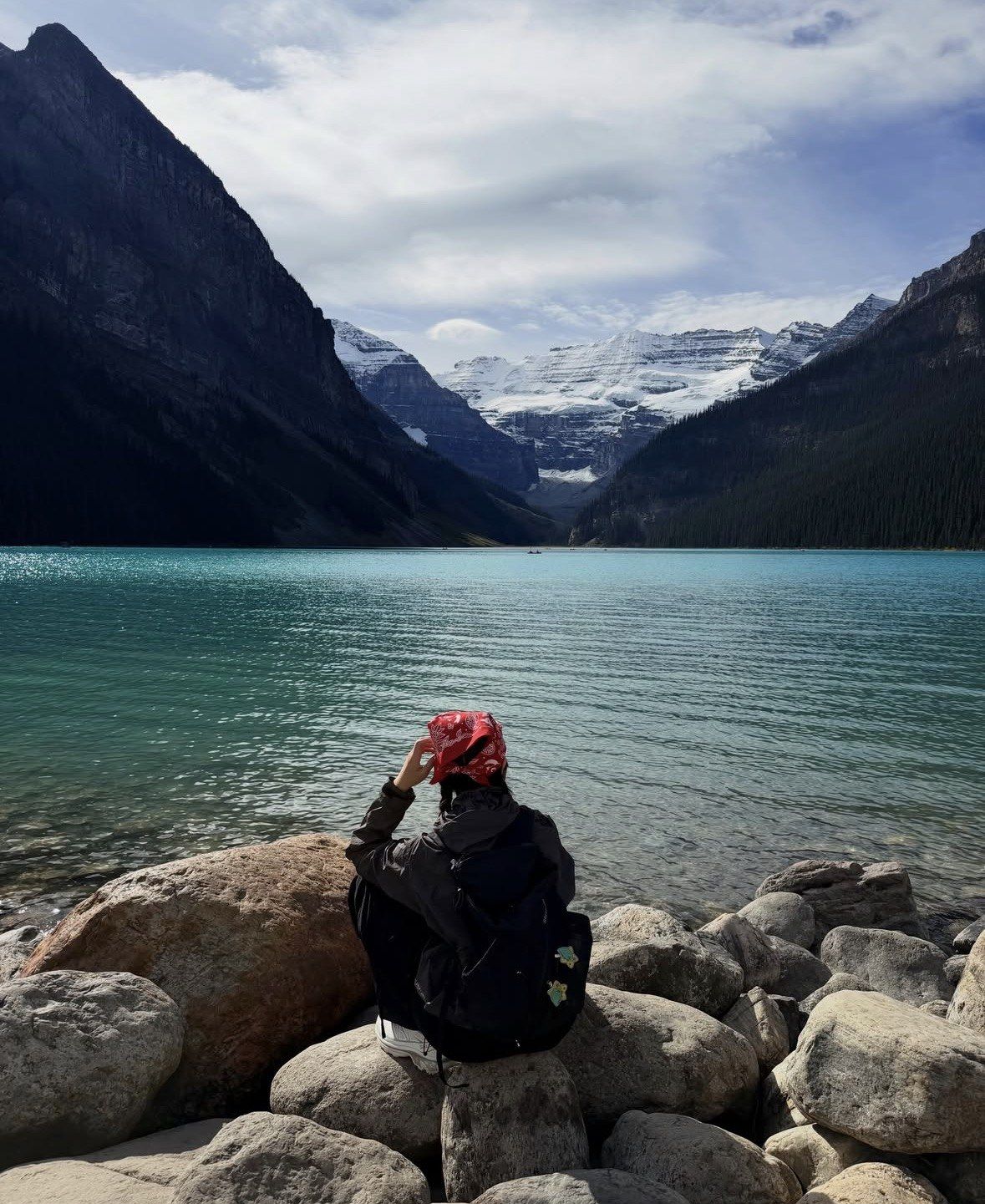
- High sun on the water: the strongest turquoise, and the shortest shadows on the far shore
- Flat cloud: muted, greener, still worth shooting with the glacier in frame
- Calm morning water: reflections of Mount Victoria rather than colour
- Wind: sky reflections wash out the turquoise until the surface settles
The neighbouring lakes fed by the same process
Moraine Lake, Peyto Lake and Emerald Lake all get their colour from the same mechanism. Peyto's blue is credited to rock flour ground off the mountains by the Peyto Glacier, and the viewpoint at the end of a short paved path of about 10 minutes is listed as accessible in every month of the year. Parks Canada places the Bow Summit and Peyto Lake viewpoints 43 km north of Lake Louise on the Icefields Parkway, and the tourism board gives 46 km from the lake, so go by the sign rather than the odometer.
Moraine Lake runs on a shorter calendar than Lake Louise and on different rules: the road is closed to personal vehicles all year, with access only for Parks Canada shuttles, licensed commercial operators, accessible-placard holders and Moraine Lake Lodge guests, and the lake is reachable only from early June to mid-October. Parks Canada also manages it as backcountry, which means cell service, running water and road lighting are all absent. The Moraine Lake page on this site covers how access works, and the best-time page sets the colour window against crowds, larch season and the ski calendar.
Over in Yoho National Park, Emerald Lake carries the same milky blue, 39 km from Lake Louise and 94 km from Banff, listed as accessible in every month of the year, with a lakeshore loop of 5.2 km that takes about 2 hours return. Seeing two or three of these lakes in one day makes the pattern plain: each basin sits under a glacier that is still grinding rock into the water feeding it.
The month and the hour to pick
Go in July if the colour is the reason for the trip. It is the warmest month at the lake, averaging 21 C by day and 5 C overnight, the thaw is well behind you, and meltwater is pushing rock flour into the lake at its heaviest rate. August gives you the same 21 C daytime average and is an equally good bet. June works once the thaw has gone through, though early June can still be catching up.
For the hour, aim for late morning into early afternoon on a clear day, when the sun is high enough to put light straight onto the water. Covering that window by shuttle is workable: the first regular Parks Canada departures leave the Park and Ride at 6:30 am, and in season the Lake Connector links the two lakes every 30 minutes from 7 am to 6 pm. Each seat has to be reserved in advance, since none are sold at the door. Lakeshore parking is not a plan in peak season, because the lots fill extremely early and stay full all day.
Sunrise is a different photograph and worth a separate morning. You trade saturated turquoise for still water, light on Mount Victoria and shorelines without crowds, and at Moraine Lake that early start is the one way to see the basin before the day fills up.
Questions people ask
Is the lake dyed or treated to keep it blue?
No. The colour comes from fine rock flour that glaciers grind off bedrock and meltwater carries into the lake. Parks Canada attributes the blue and green of glacial waters in the mountain parks to this suspended sediment. Nothing is added to the water.
Will the lake be blue in May?
Often not. Early June is the usual start of the thaw at Lake Louise and the other lakes up at that altitude, with the lower lakes opening up mid to late May, so a visit in the first days of May can look out over a white, frozen surface. May averages 13 C by day and -1 C overnight at the lake. If turquoise is the point of the trip, come later.
What colour is the lake in winter?
There is no turquoise once the surface freezes, which the Fairmont Chateau Lake Louise says normally happens around mid-December when temperatures stay below freezing. The lakeshore and the community stay open all year, and the Chateau runs a natural ice rink on the frozen lake, lit for evening skating.
Do photos exaggerate the colour?
The colour is real, but it changes through the day and with the weather, and most published photographs were taken with direct sun on the water and a calm surface. Under flat cloud or in wind the same view reads greener and duller. Expect the lake to look different in the first hour after sunrise than it does at midday.
Is Moraine Lake bluer than Lake Louise?
Both get their colour from the same glacial rock flour, and which looks stronger on a given day depends on the light, the wind and how much sediment the melt is delivering. Access is where they part company: you can reach Lake Louise at any point in the year, while Moraine Lake Road stays closed to personal vehicles all year and the lake can only be visited from early June to mid-October.
Read also