In shortLake Louise sits at 1,731 m, and the lake basin runs cooler than Banff on the valley floor: 21 C by day and 5 C overnight in July against Banff's 23 C and 7 C. Days average 13 C in May and 8 C in October, and January lows average -15 C. Snow lingers on the upper trails, and the teahouse routes are avalanche terrain from November to mid-May.
1,731 mLakeshore elevation
21 C / 5 CJuly day and night
-15 CJanuary average low
Nov to mid-MayAvalanche risk, teahouse trails
Weather at Lake Louise starts with the altitude
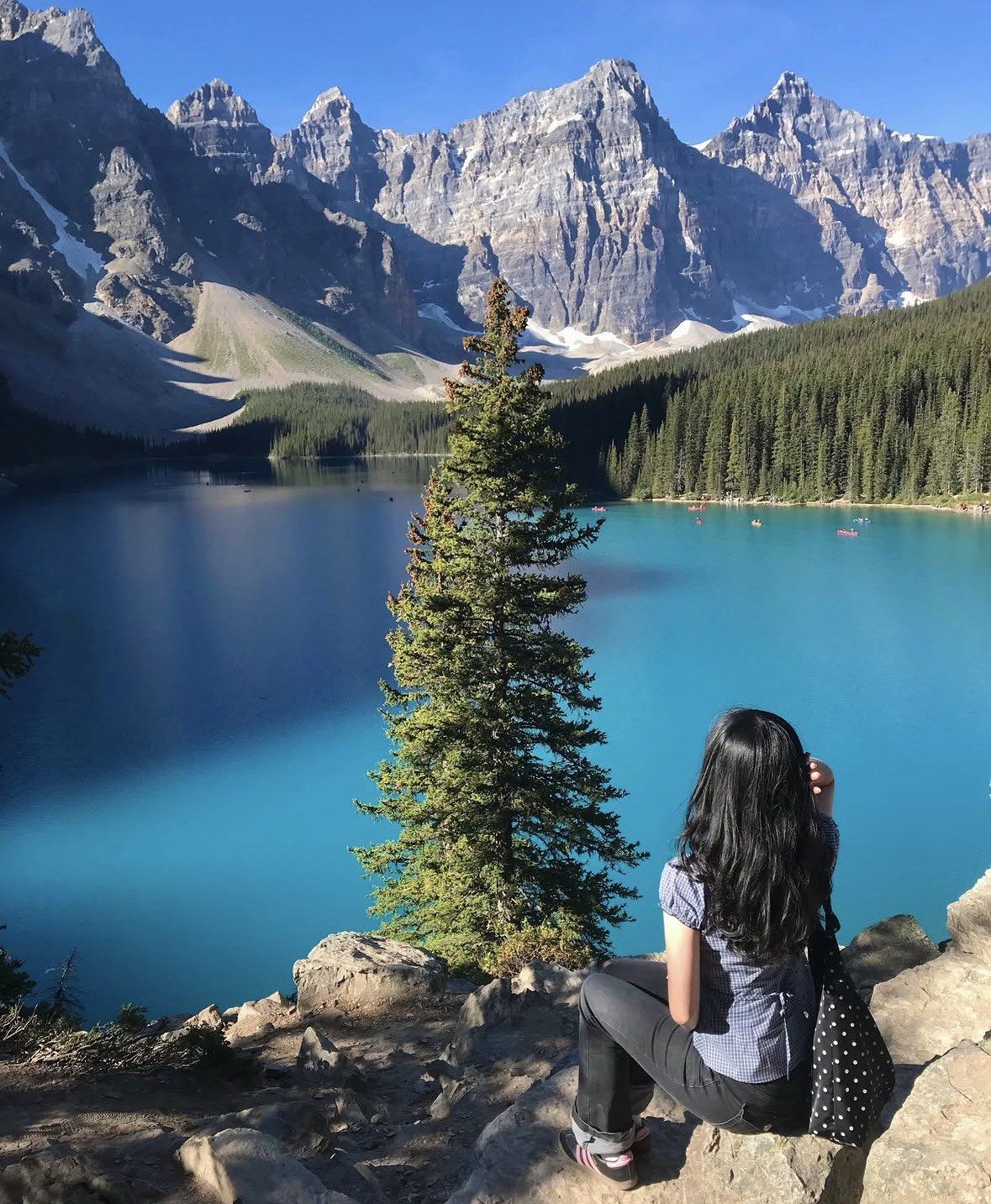
Every temperature figure on this page is a 1,731 m reading, and that altitude explains most of what follows. July is the warmest month here, averaging 21 C by day and 5 C overnight, while Banff in the same month averages 23 C and 7 C. Two degrees reads like nothing on paper. It feels different when you are standing still by the water at seven in the morning in a cotton t-shirt, waiting for the light to come over Mount Victoria.
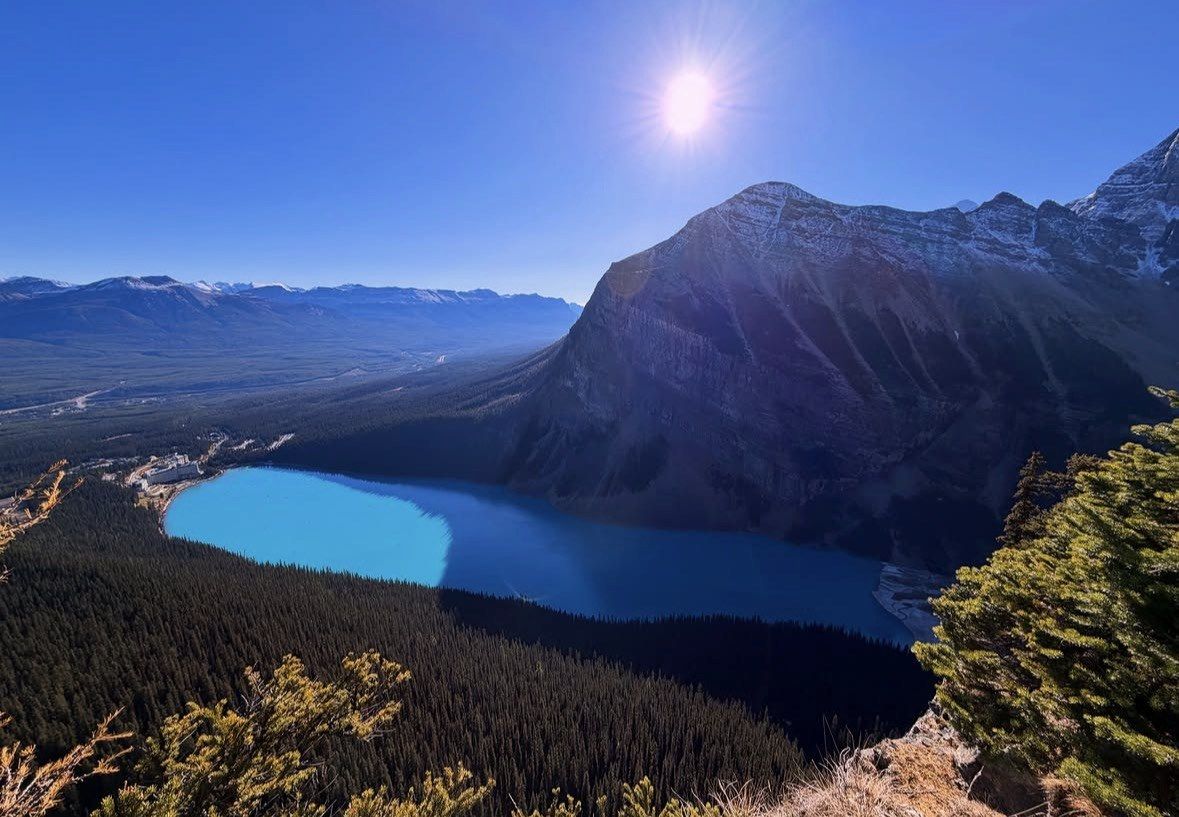
Nights are the part most visitors underestimate. Overnight averages at the lake sit at or below freezing in May, September and October, so an early start and a late finish both happen in cold air even in the middle of the summer season. The lake itself is 70 m deep under a hanging glacier, and the basin holds shade long after the valley is in sun.
Then there is the sun. At this elevation bright days burn quickly, snow and ice bounce light back at you, and the same afternoon can turn grey and wet with little warning. No official source publishes a storm pattern for Lake Louise, so treat changeable afternoons as normal and carry a shell instead of trusting a forecast you read the night before.
Lake Louise temperature by month
April to October figures below are Lake Louise day and night averages from Banff & Lake Louise Tourism. November to March are published only as an area-wide range for Banff and Lake Louise together, so they are shown that way rather than merged into day and night values. January is the coldest month, with average lows of -15 C and a coldest recorded reading of -30 C.
Snow can fall on the alpine trails above the lake at any time, including July, and a cold snap in August still means gloves at the trailhead. The monthly figures describe the middle of the range, so pack for several degrees either side of them.
| Month | Typical temperatures | What it means at the lake |
|---|
| April | 7 C day / -6 C night | Snow still common at higher elevations; teahouse trails remain avalanche terrain |
|---|
| May | 13 C day / -1 C night | Lake often still white; Parks Canada rates the Plain of Six Glaciers for spring avalanche conditions |
|---|
| June | 17 C day / 3 C night | High lakes usually start to thaw early in the month; alpine hiking season begins late June |
|---|
| July | 21 C day / 5 C night | Warmest month (Banff 23 C / 7 C); snow can still fall on the alpine trails |
|---|
| August | 21 C day / 4 C night | Warm afternoons, cold mornings at the trailhead |
|---|
| September | 15 C day / 0 C night | Larch colour turns mid to late September and peaks from the last week |
|---|
| October | 8 C day / -5 C night | Frozen mornings; both teahouses close after Canadian Thanksgiving |
|---|
| November | -8 C to 1 C (area range) | Cold enough for the cross-country tracks from November 1, and for the ski hill from November 6 if conditions allow |
|---|
| December | -14 C to -5 C (area range) | Sustained sub-zero air normally locks the lake solid by about mid-December |
|---|
| January | -14 C to -4 C (area range) | Coldest month; average lows -15 C, coldest recorded -30 C |
|---|
| February | -12 C to 0 C (area range) | Ice Magic runs February 3-7, 2027 at the Chateau, inside SnowDays |
|---|
| March | -8 C to 4 C (area range) | Milder afternoons; grizzlies begin leaving dens from late March |
|---|
Snow, ice and how long the upper trails stay buried
Snowfall around Lake Louise is described in words rather than in centimetres. The peaks and ski hills get large amounts, the town of Banff a moderate amount and the hamlet of Lake Louise a little more than Banff. No official monthly snowfall or precipitation totals for a Lake Louise station were available, so plan from that pattern and check the resort's daily snow report in winter instead of a number you found online.
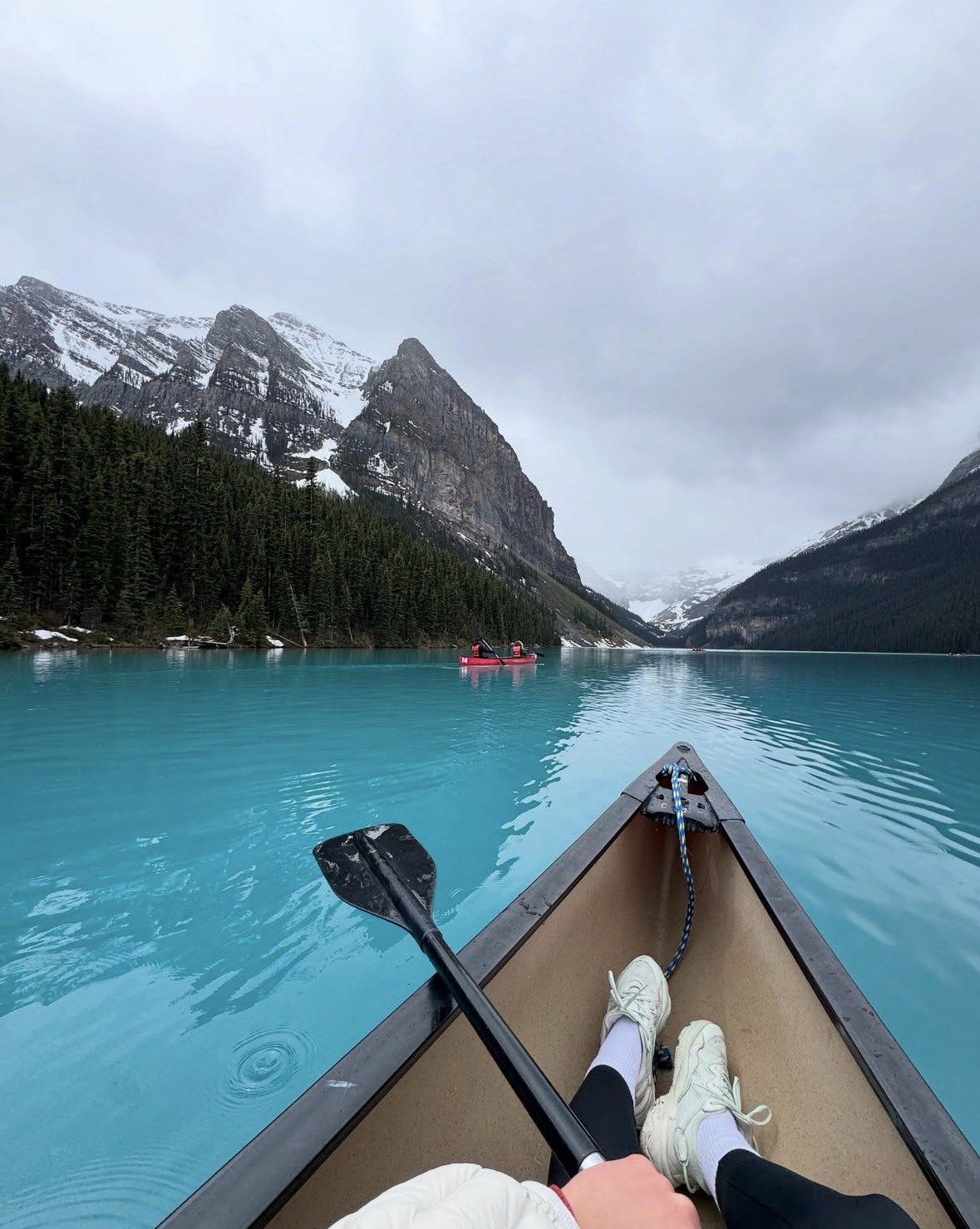
Ice and meltwater set the rest of the calendar. The lake usually freezes solid around mid-December once temperatures stay below freezing, and high-elevation lakes including Lake Louise usually begin to thaw in early June, with lower lakes going mid to late May. A visit in the second half of May can easily show you ice instead of turquoise, because the rock flour that colours the water arrives with the spring and early summer melt.
Above the lake, snow lies far longer than it does on the shore. The teahouse trails are listed with a June to October season, which is the practical snow-free window on the upper routes, and alpine hiking season proper starts in late June. From November through mid-May the snowpack puts those hikes into avalanche terrain, and Parks Canada is blunt that a signposted winter route is not automatically a safe one; the Plain of Six Glaciers area also carries a spring avalanche rating through May and June. Do not attempt those climbs in that window, whatever the forecast shows in the valley.
In June and early July you can expect wet, soft snow on the upper sections of the Lake Agnes and Plain of Six Glaciers routes even when the lakeshore path is dry. The hikes page sets out the distances and the elevation gain on each route so you can match the climb to the conditions on your dates.
Four days in the Rockies, any season
From CAD 1268 and rated 4.9 ★ (219 reviews), this four-day trip from Vancouver covers the coach, three hotel nights with one in downtown Banff, breakfast and seasonal Moraine Lake admission, so a cold snap changes what you pack rather than whether the trip happens.
★ 4.9/5 · 219 reviews
What to pack for each season
Layers do the work here, because the gap between a sunny lakeshore at midday and a shaded trail at 2,135 m is larger than the daily average suggests. Build around a base layer, an insulating mid layer and a waterproof shell, then adjust the mid layer by month.
Footwear is where people get caught out. Trainers cope with the lakeshore path in July and August and with almost nothing else, including the teahouse trails in June, when melting snow turns the upper switchbacks to slush.
- April and May: winter clothing at the lake, with overnight averages of -6 C and -1 C. Waterproof boots, gloves and a warm hat. Traction devices for icy shaded paths. The teahouse climbs are out.
- June: days average 17 C and nights 3 C. Shell jacket, fleece, boots with real grip, gaiters if you plan to go above the lake while snow patches remain.
- July and August: 21 C afternoons and 4 to 5 C nights. Sun hat, sunglasses, high-factor sunscreen, plus a warm layer and a rain shell in the daypack even on a cloudless morning.
- September and October: 15 C falling to 8 C by day, 0 C to -5 C at night. Add a proper insulated jacket, a headtorch for shorter daylight, and traction for frosted early-morning trails.
- November to March: an area range from -14 C to 4 C depending on the month. Insulated boots, thermal base layers, windproof outer shell, hat, gloves and spare socks. Skating on the lake happens in the evening, which is the coldest part of a winter day.
When the weather changes the timetable
Mountain weather closes things, and the official pages say so in their own wording. The Moraine Lake shuttle and the Lake Connector ran June 1 to October 12 in 2026 subject to weather, and the Lake Louise lifts and sightseeing gondola publish their winter hours as 9:30 am to 4:30 pm and 10:30 am to 4:00 pm, conditions permitting. The 2026-27 ski season opening date of November 6 carries the same caveat. Ice Magic, staged at the Chateau from February 3 to 7, 2027, may be modified or cancelled in extreme weather.
If your plan continues north on the Icefields Parkway, the rules tighten in winter: snow tires or chains are required from November 1 to March 31 and whenever the road is snow or ice covered, snowplows run only between 7 am and 3:30 pm, and there are no services at all across the 230 km between Jasper and Lake Louise. There is no cell coverage on that road either.
Build one weather-proof alternative into every day at the lake. The best time to visit page lines the months up against crowds, lake colour and what is actually open, which is the easiest way to pick dates before you worry about the forecast for them.
Tours that run in every season
Some of the Rockies' moving parts are seasonal. Moraine Lake is reachable only from early June to mid-October, the teahouses are closed November through May, the summer sightseeing gondola finished its 2026 season on October 11 and is scheduled to return in spring 2027, and the canoes come off the water for the winter.
The multi-day option on this site keeps running through the calendar. Pricing on the 4-Day Canadian Rockies & Banff Tour from Vancouver starts at CAD 1268, with a rating of 4.9 ★ (219 reviews). What the fare carries whatever the month: a deluxe coach, an experienced tour guide, three nights of hotel accommodation with one of them in downtown Banff, breakfast, a wine tasting, all fees and taxes, seasonal admission to Moraine Lake, and one lunch served either on day 1 or on day 4 depending on the departure date. Outside the Moraine Lake window the lakes you can reach still include Lake Louise itself, which stays open all year.
Check your booked dates against the month in the table above, then pack to those numbers. A September night at the lake averages 0 C, whatever the July photographs suggest.
Questions people ask
Does it snow at Lake Louise in summer?
Yes, on the high ground. The lakeshore average for July is 21 C by day, and the alpine trails above it can still take snow in any month of the year, July included. That is the reason a warm layer and a waterproof shell belong in the daypack on a July hike, and the reason the upper routes stay listed with a June to October season.
Is the lake turquoise in May?
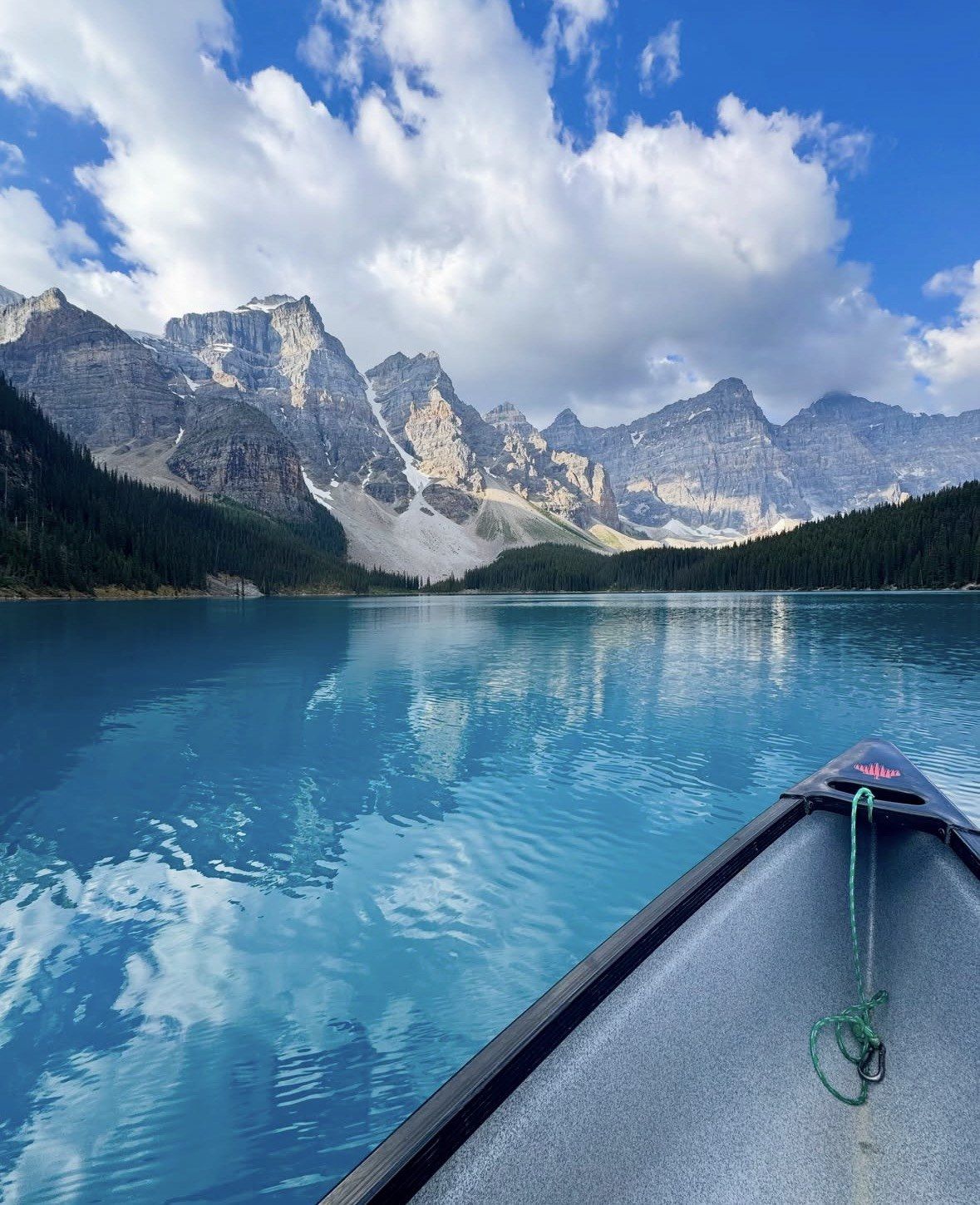
Often not. The high lakes, Lake Louise among them, usually only begin to thaw in early June; it is the lower lakes that clear mid to late May. Turn up in May and the surface in front of you may still be white. The colour comes from rock flour carried in by glacial meltwater, and that sediment load arrives in spring and early summer.
Do I need microspikes or ice cleats?
For anything beyond the paved lakeshore in the cold half of the year, yes. Shaded sections hold ice from autumn frosts through to the spring melt, and the upper trails keep snow long after the valley is clear. Carry traction between roughly October and June and use it on frozen or hard-packed sections.
How cold does it get in winter at Lake Louise?
The published range for the Banff and Lake Louise area runs from -14 C to -5 C in December and -14 C to -4 C in January, with January the coldest month at average lows of -15 C and a coldest recorded reading of -30 C. February and March ease to ranges of -12 C to 0 C and -8 C to 4 C. Dress for the evening, since the lit skating on the frozen lake happens after dark.
Can bad weather cancel a visit to the lakes?
It can affect the services rather than the lake itself. The Moraine Lake shuttle and the Lake Connector operated subject to weather in 2026, the lifts and sightseeing gondola publish their hours as conditions permitting, and Ice Magic may be modified or cancelled in extreme weather. The community of Lake Louise and the lakeshore are open year-round, so keep a flexible plan for the day rather than one fixed activity.
Read also