In shortCanoes launch from the boathouse dock below the Fairmont Chateau Lake Louise, and the rental is run by the hotel rather than by Parks Canada. Paddling is possible from June into October only, and in practice the dock waits until mid-June: Parks Canada puts the usual thaw at the end of May, which still leaves a gap before boats go out. Most paddlers aim for the Victoria Glacier end and back.
June–OctoberCanoe rental season
mid-JuneDocks typically open
3 adultsMaximum per canoe
from CAD 79Day trip from Banff
Where the boats go out and who runs them
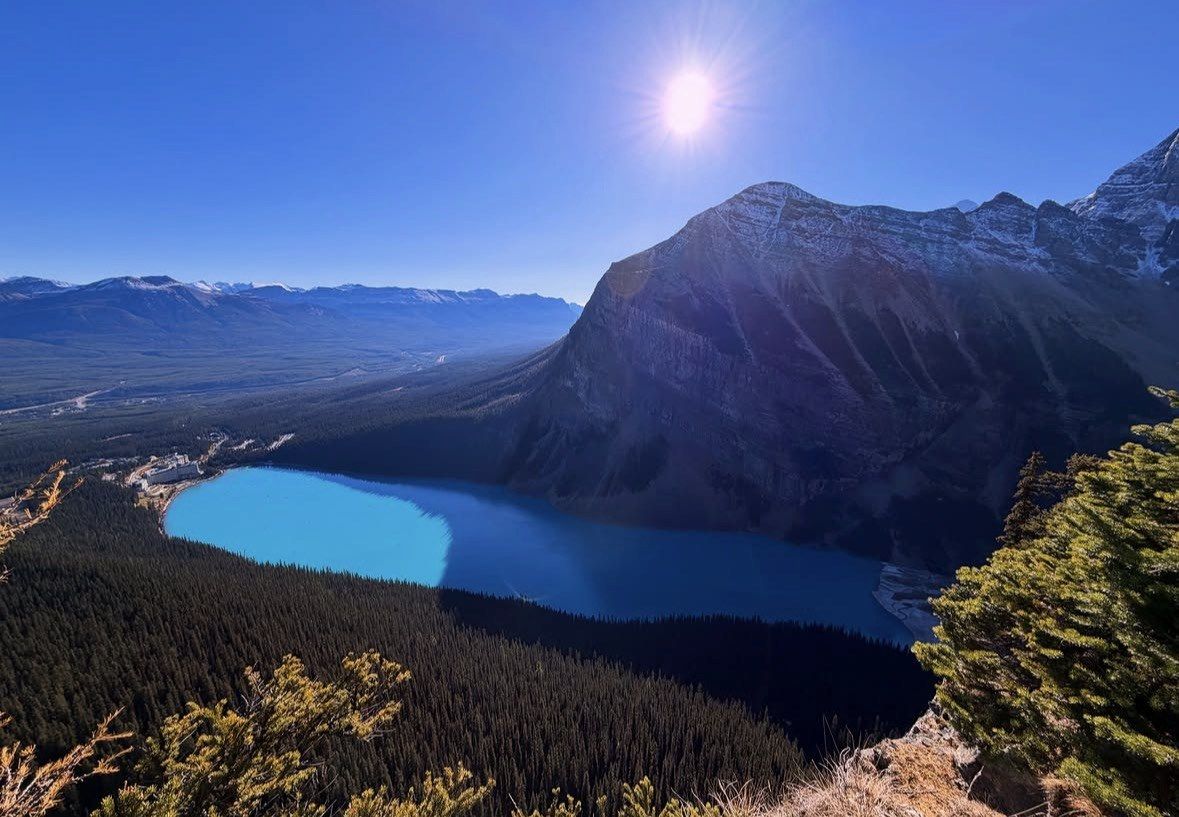
The dock sits on the north shore, below the Fairmont Chateau Lake Louise and a little past the start of the flat lakeshore path. The Fairmont runs the lakeshore canoes in summer, the same operation that clears the natural ice rink on the lake in winter. Keep that in mind when you plan, because the boathouse keeps its own calendar and the official hotel page showed it closed for the season when this page was written.
Capacity is set by the boat. One canoe takes three adults, or two adults aged 16 or over with two small children who each weigh under 25 kg. Five adults means two boats, which is worth working out before you reach the front of the line.
Rates and dock hours for 2027 had not been published on the official pages when this page was written, so check them on the day rather than budgeting from an old blog post.
When the canoe season starts and when it ends
Five months is the whole of your opportunity: boats are out from June into October, nothing is available between November and May, and mid-June is the usual date for the dock itself to open. Ice sets the start date. Parks Canada states that the lakes usually thaw by late May, while the tourism board puts higher lakes including Lake Louise closer to early June. A late-May visit can still show you a white surface, so treat early June as the first plausible paddling week and confirm before you travel.
October closes things down from the other side. Days average 8 C with nights at minus 5 C, larch colour peaks from the last week of September into the first week of October, and the Parks Canada lakeshore shuttle ran only to October 12 in 2026. The paddling window and the access window end within days of each other.
| Month | Average day / night at the lake | What it means for paddling |
|---|
| June | 17 C / 3 C | Docks typically open mid-June; the lake may still be clearing |
|---|
| July | 21 C / 5 C | Warmest month of the year at the lake |
|---|
| August | 21 C / 4 C | Same warmth, heaviest crowds on the shore |
|---|
| September | 15 C / 0 C | Cold mornings; larch colour from the last week |
|---|
| October | 8 C / -5 C | End of the season; 2026 shuttle service ran to October 12 |
|---|
The short route most people paddle
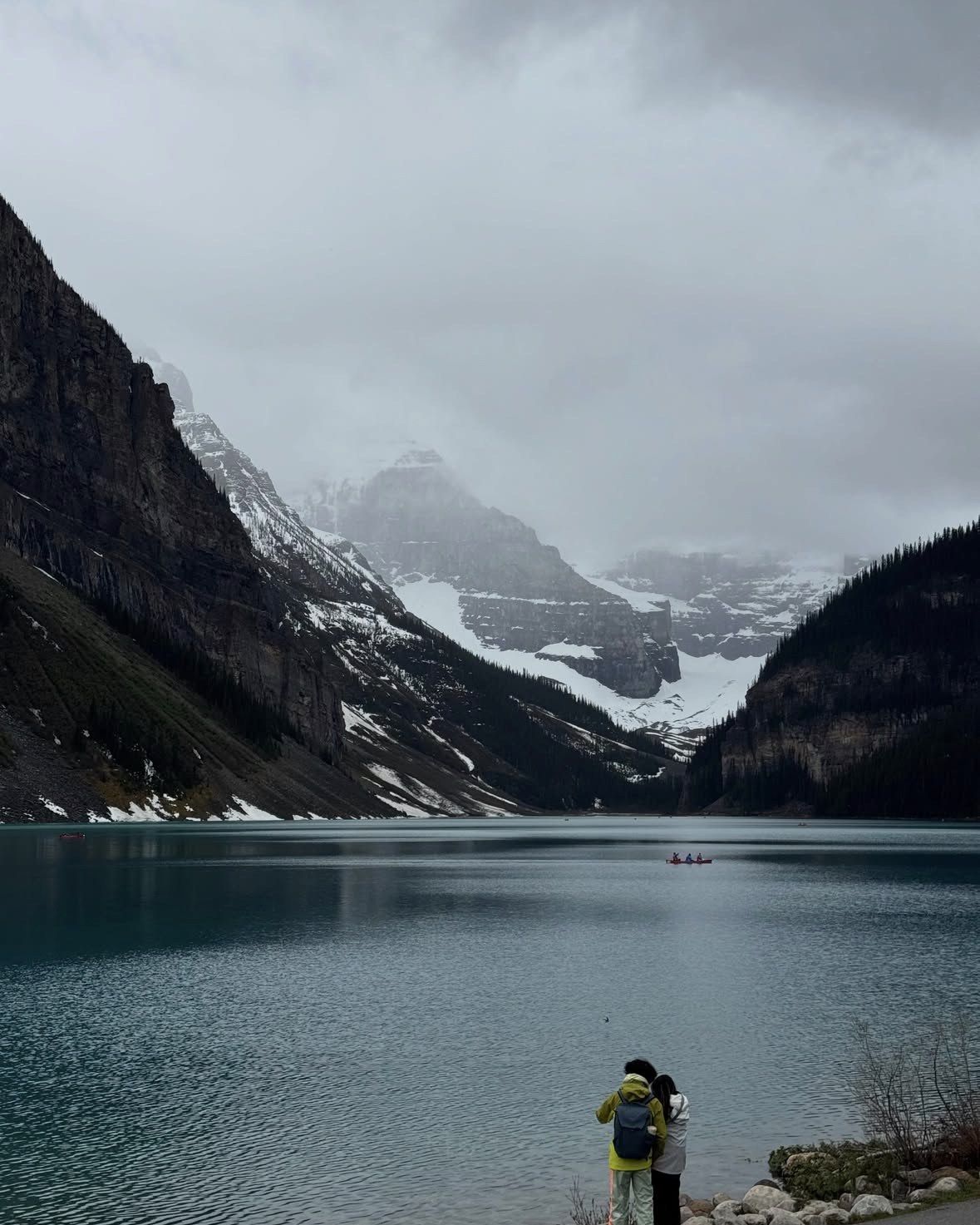
From the dock you have about 2.4 km of water ahead of you before the far shoreline. The standard outing is a line up the middle toward the far end, where Mount Victoria and its hanging Victoria Glacier close the valley, then a turn and a slow drift back along the opposite shore. Few people paddle the whole length and back, and there is little reason to: the mountain fills the view within the first few hundred metres, while the shoreline detail changes faster than the skyline does.
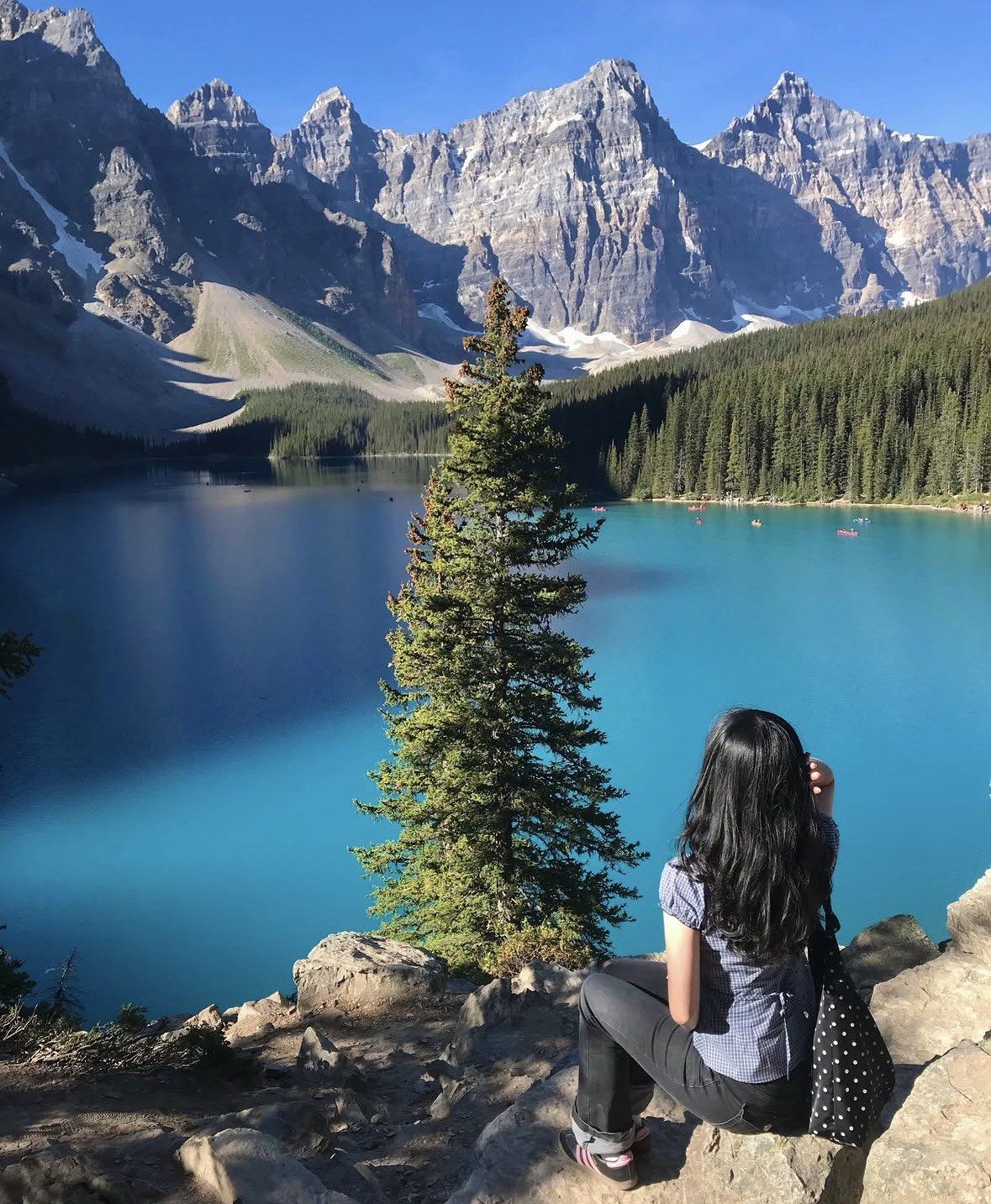
Colour is the reason to be out there. Melting glaciers grind fine rock flour, meltwater carries it into the lake, and the suspended sediment refracts the sunlight into the turquoise, which shifts through the day with the angle of the light. The sediment load arrives in spring and early summer, so July and August water reads strongest from the surface.
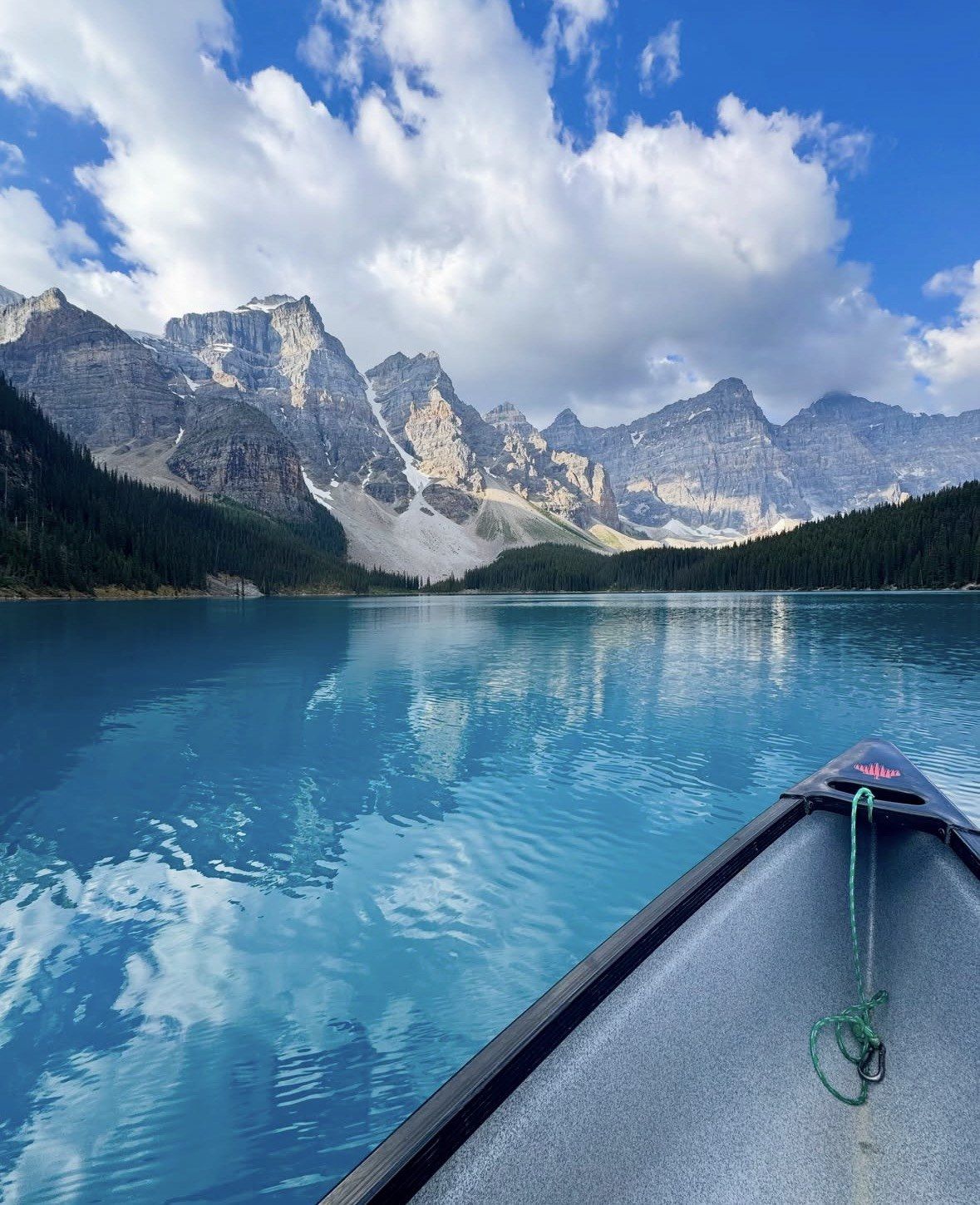
For photographs, the useful angles are the ones the path cannot give you: the chateau framed against forest from mid-lake, a bow and paddle in the foreground with the glacier behind, the shoreline cliffs seen from below instead of along. Keep your camera on a strap or in a dry bag. The lake sits at 1,731 m and is 70 m deep, and nothing that goes over the side comes back.
Lake Louise and Moraine Lake in one day from Banff
An 8 to 10 hour day trip from CAD 79, with pickups at 09:45 in Banff, 09:20 in Canmore and 07:50 in Calgary Downtown. The Moraine Lake permit and access come included with the ticket, and your hours at Lake Louise go to the boathouse instead of to the parking lot.
★ 4.9/5 · 1,602 reviews
When to go out and when to turn back
Go out in the first hours the dock is open. Early morning gives you the best chance of a surface flat enough to hold a reflection, and the shortest line, since the day-trip coaches and the full parking lots have not yet emptied onto the shore. By late morning in July and August you queue in company.
Wind usually builds as the day warms, and a lake this size turns from mirror to short chop quickly. No official page publishes a wind or storm pattern for Lake Louise, so read the surface yourself before you push off: if whitecaps are forming at the far end, that is the end you will be fighting on the way back. Point the bow into the waves instead of taking them side-on, and turn around earlier than you planned.
The water is glacier meltwater and stays cold all summer, whatever the air is doing. Put a life jacket on at the dock and leave it on, children included, and dress in layers you can paddle in. A 21 C July afternoon on the shore tells you nothing about the water temperature or the wind out on the lake.
With children aboard, put the adults at bow and stern and keep the small ones low and central. Agree before you launch that nobody stands up and nobody swaps seats on the water. The official pages do not say whether swimming from a canoe is allowed here, so do not plan on it.
- Arrive early; the flat water and the short queue come at the same hour
- Work out your boats before you reach the dock: three adults fit one canoe, or two adults aged 16 and over with two children each under 25 kg
- Life jackets on for everyone, from the dock back to the dock
- Phones and cameras on a strap or stowed; the lake is 70 m deep
- Turn back when the chop starts building, even if you have not reached the glacier end
What happens to the lake in winter
The paddling season has a direct replacement. The Fairmont reports that the lake usually freezes solid around mid-December, once temperatures stay below freezing, and the hotel that runs the canoes in summer clears a natural rink on the ice; the tourism board flags it as an evening activity because the rink is lit after dark. The shoreline you launch from in July also hosts Ice Magic, held at the chateau on February 3 to 7, 2027, one piece of the SnowDays festival that runs from January 21 to February 7, 2027.
Between November and May the boathouse is closed and there is nothing to decide about paddling. The winter page on this site covers the skating, the festival and how the lakeshore works once the shuttle season has ended.
Should you build paddling time into the day
Build it in if you reach the shore before mid-morning inside the June to October window, your return is flexible, and seeing the colour from water level is one of the things you came for. Skip it if the day already carries a teahouse hike: Lake Agnes alone is 2.5 to 3 hours round trip on the Parks Canada figures, and a dock queue on top of that leaves you watching the clock instead of the glacier.
On a structured day trip, what matters is how long you actually stand at Lake Louise. The day trip on this site runs 8 to 10 hours from Banff, Canmore or Calgary, with Moraine Lake access and a lunch stop at Lake Louise Village in the schedule, so the shoreline is a block inside that day. If paddling is the priority, use the lakeshore stop for it: head straight for the boathouse while everyone else photographs from the path, and keep the walk for afterwards.
Getting to the shore is the other half of the plan. The Lake Louise lakeshore lots fill extremely early and stay full through the day in peak season, and Parks Canada names the shuttle and Roam Public Transit as the best way in; Roam Route 8X runs daily all year from downtown Banff and takes about 1 hour 20 minutes. A booked day trip removes that step and puts you at the lake with the transfer and park access already handled.
Questions people ask
Can young children go in a canoe on Lake Louise?
Yes, within the boat's limits. One canoe takes two adults aged 16 or over together with two small children who each weigh under 25 kg, or three adults and no children. Keep the children seated low and central, put the adults at bow and stern, and count on life jackets for everyone aboard.
Can I paddle Lake Louise in May?
Almost certainly not. Canoe rental runs June through October and is closed November to May, and the docks typically open in mid-June. Parks Canada says the lakes usually thaw by late May, while the tourism board puts lakes higher up such as Lake Louise closer to early June, so a May visit can still find ice on the surface. Check the official pages before you plan around it.
Is there a boat option at the other lakes nearby?
Emerald Lake, 39 km from Lake Louise and 94 km from Banff in Yoho National Park, has canoe rental on a first-come, first-served basis, and personal watercraft are prohibited there. Parking at Emerald Lake is extremely limited, which is the practical constraint in summer. Emerald Lake Road stays open year-round, while the Yoho Valley Road to Takakkaw Falls does not.
What should I wear on the water in July?
Layers you can still paddle in. July is the warmest month at the lake, averaging 21 C by day and 5 C overnight, but the water is glacier meltwater and stays cold through the season, and wind on the open lake makes the air feel colder than it does on the path. A windproof layer and a hat do more for you than a heavy jacket.
How much of the lake can you cover in a short paddle?
The lake is about 2.4 km long, and most people turn back well before the far end. The view toward Mount Victoria and its hanging Victoria Glacier opens up in the first stretch from the dock, so a short outing still gets you the angle you came for. If the surface starts to chop up, turn earlier: the return leg into a headwind takes noticeably longer than the way out.
Read also