In shortFairmont Chateau Lake Louise is the hotel on the shore of Lake Louise, 4 km up a side road from Lake Louise village at 1,731 m. It began in 1890 as a two-bedroom chalet planned by CPR general manager Cornelius Van Horne for outdoor travellers. The hotel runs the summer canoe dock and the natural ice rink on the frozen lake, lit after dark for evening skating, while Parks Canada manages the park around it.
1890hotel first planned
2 bedroomsthe original Chalet Lake Louise
1,731 melevation of the lakefront
4 kmfrom the village up to the lake
Where the building stands and what you see from it
The hotel stands at the end of the lake nearest the road, so the water runs away from its terrace for about 2.4 km towards Mount Victoria and the hanging Victoria Glacier. Shoot from the lakefront and the building is behind you, which is why it turns up in almost every photograph taken from the trails above and in almost none taken from the shore.
Everything on this shore sits inside a few hundred metres. The paved lakeshore path starts in front of the building and follows the north side of the water. The boat dock is below the hotel at the near corner of the lake. The teahouse trails leave from the same stretch of shoreline and climb away from the water within the first few minutes of walking. In winter the cleared ice lies directly out from the hotel on the frozen surface, and the skating lights go on there after dark.
Work the layout out before you arrive. People lose an hour crossing the lawn in search of a viewpoint that is not there, when the view they want is five minutes along the shore path or 400 vertical metres up a switchback.
How Chateau Lake Louise grew from a two-bedroom chalet
The hotel traces its origin to 1890, when Cornelius Van Horne, general manager of the Canadian Pacific Railway, planned accommodation here for outdoor adventurers rather than for sightseers in evening dress. The first building, Chalet Lake Louise, had two bedrooms. Everything on the lakefront today grew from it.
A Stoney guide led CPR worker Tom Wilson here in 1882, a few years before the chalet. Wilson's own name for the water was Emerald Lake; the name the hotel would eventually carry arrived in 1884, when the lake was renamed after Princess Louise Caroline Alberta, a daughter of Queen Victoria. The Stoney name means 'lake of the little fishes'.
The railway company built outwards from the shore as well. The Plain of Six Glaciers Tea House went up in the mid-1920s, put there by the Canadian Pacific Railway, and the first Lake Agnes teahouse opened in 1904, though the building standing there now dates from 1981. Both still sit on the two trails you can start from the lawn in front of the hotel.
The Chateau Lake Louise canoe dock in summer and the skating rink in winter
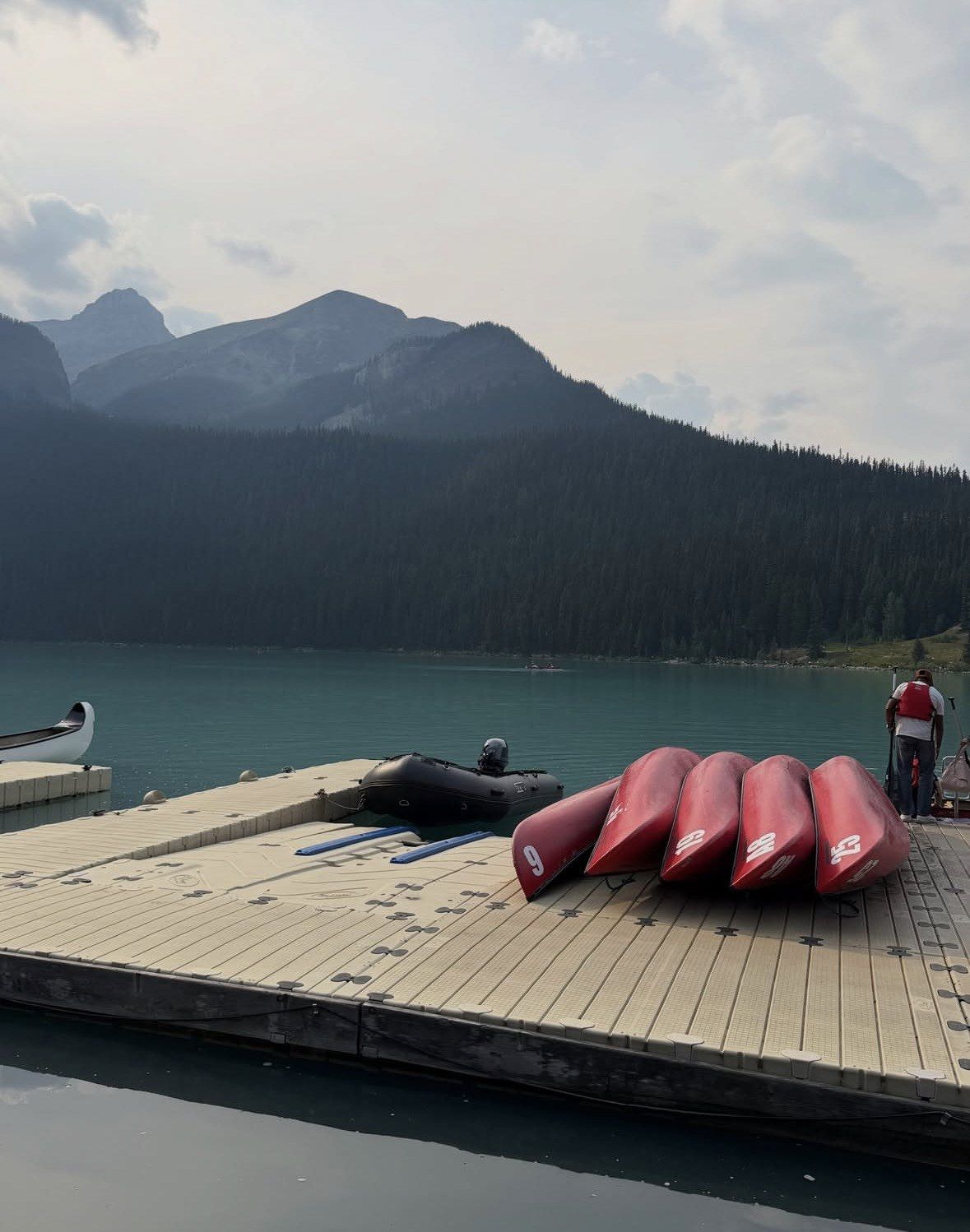
The hotel runs the lake surface: the lakeshore canoe rentals in summer and the natural ice rink cut into the frozen lake in winter. For either one you deal with its own operation at the boathouse or the rental shop, whether or not you are staying the night. Parks Canada manages everything around the water.
The boathouse below the hotel works a June to October season and shuts from November through May, with the docks usually going in around the middle of June. The lake itself usually begins to thaw in early June, so a visit in late May can show you white ice rather than turquoise water, with no boats on it at all.
Winter is the stronger case for coming down to the shore itself. The lake normally freezes solid around mid-December once temperatures stay below freezing, and Banff & Lake Louise Tourism singles out evening skating here, with the rink lit after dark. February brings the ice sculptures staged at the hotel inside the wider SnowDays festival; that event is ticketed, and the ticket includes a compulsory shuttle because there is no parking at the site. Dress for a lakefront that sits at 1,731 m.
Rates and dock hours for the 2027 season were not posted on the official pages when this page was written. Check them before you plan an afternoon around a boat.
- Run by the hotel: the canoe dock in summer, the cleared natural rink and the lit evening skating in winter.
- Open to anyone on foot: the paved lakeshore path along the water, the viewpoints along it, and the trailheads leaving the shore.
- Managed by Parks Canada: the park itself, the trails above the lake and the wildlife rules that apply from the shoreline upwards.
The trails that leave from the shoreline
Both classic climbs above Lake Louise start on this shore, within sight of the hotel. Parks Canada's figures for the two valleys are in the table below. Numbers published by the tourism board for the same two paths do not match them, so before you leave the lawn look at the day's trail report instead of counting on the shorter set of distances.
Season matters more than fitness here. Both teahouses are listed open June through October and closed November through May, and Parks Canada warns that these hikes are unsafe from November to mid-May because of avalanche risk, noting that not every signposted winter route is a safe one. Snow falls on the upper trails in any month, July included. Wildlife rules begin at the edge of the hotel lawn: keep 100 m back from bears, wolves, cougars and coyotes, 30 m from deer, elk, sheep and moose, and do not feed or disturb an animal, which is an offence in a national park.
| From the lakefront | One way | Elevation gain | Round trip |
|---|
| Lake Agnes Tea House | 3.9 km | 495 m | 2.5 to 3 hours, moderate |
|---|
| Plain of Six Glaciers | 5.9 km | 595 m (250 m of loss) | about 4 hours, moderate |
|---|
| Big Beehive spur from Lake Agnes | 1.5 km | 150 m (115 m of loss) | added to the Lake Agnes day |
|---|
| Loop linking both teahouses | about 14.5 km | — | a full day from the hotel |
|---|
Reach the lakefront without the parking problem
An 8 to 10 hour day trip from CAD 79 that collects you at 09:45 in Banff, 09:20 in Canmore or 07:50 in Calgary Downtown and puts the shoreline in front of the hotel into a fixed schedule, with a professional driver and guide and the Moraine Lake permit and access fee included inside its season.
★ 4.9/5 · 1,602 reviews
Getting up to the lakefront and how long to allow
The lake is 62 km from the town of Banff, and the last 4 km climb from Lake Louise village on a side road. The village sits on the valley floor and the water is up the hill from it. Questions about the climb, the road and the trails above the hotel get answered at the Lake Louise Visitor Centre, in the village at 201 Village Road next to Samson Mall, which keeps 9 am to 5 pm hours for most of the year and stays open an hour longer, until 6 pm, from June 6 to August 26.
Parking is the part that breaks plans. In peak season the lots by the lakefront are full extremely early and stay that way through the day, according to Parks Canada, which points visitors towards the shuttle or Roam Public Transit rather than a private car for both lakes. Roam Route 8X runs daily all year between downtown Banff, the village and the lakeshore, a ride the operator times at about 1 hour 20 minutes, with seats worth reserving from May to October. On the Parks Canada shuttle every seat is booked ahead and nothing is sold at the door; the Lakeshore run worked May 15 to October 12 in 2026, while the Moraine Lake shuttle and the Lake Connector kept a shorter window of June 1 to October 12, weather permitting.
Half a day covers the shore path, the dock area and the view down the lake. A teahouse climb turns it into a full day, and that means standing on this shore in the early morning rather than at lunchtime.
If you would rather not drive the highway and then hunt for a space at the top, the day trips on this site stop at the lakefront as part of a single booking from Banff, Canmore or Calgary, with Moraine Lake access inside its own season and a guide on board.
Questions people ask
Can I walk the lakefront if I am not staying at the hotel?
Yes. The paved shoreline path in front of the building and the viewpoints along it are part of the national park and open to anyone who reaches the lake. What belongs to the hotel is the water-based operation, the canoe dock in summer and the cleared rink in winter. Park admission is required to be in the park, and the lakeshore itself is open year-round.
What was the hotel called when it first opened?
Chalet Lake Louise. It came out of an 1890 plan by Cornelius Van Horne, then general manager of the Canadian Pacific Railway, who wanted lodging here for outdoor adventurers. The original building had two bedrooms, and the lake had carried the name Lake Louise only since 1884.
Who looks after the ice rink on the lake?
Fairmont Chateau Lake Louise runs it. The rink is cut on the frozen lake out from the hotel, and the tourism board highlights evening skating there, with the surface lit after dark. By the hotel's own account, a normal year brings a solid freeze around the middle of December. Opening and closing dates for the current season were not published officially when this page was written.
Is the lake worth visiting outside the canoe season?
Yes, but treat it as a different place. Between late autumn and spring there is no turquoise water and the teahouses are closed, while the shore, the hotel and the frozen lake surface are the attraction, along with the skating. Roam Route 8X runs to the lakeshore every day of the year, and Moraine Lake cannot be reached at all outside roughly June to mid-October.
How much time should I leave for the lakefront on a day trip?
Plan the shoreline walk and the view down the 2.4 km of water as a block of one to two hours. Anything up the valley needs a lot more: the shortest teahouse climb is listed by Parks Canada at 3.9 km one way with 495 m of gain. On a scheduled 8 to 10 hour trip that also takes in Moraine Lake, use your lakefront time on the shore path rather than on a climb.
Read also