The Origins: Lake of the Little Fishes
Long before any survey map named it, the Stoney knew this water, and their name for it translates as lake of the little fishes. In 1882 a Stoney guide led Tom Wilson, a worker on the Canadian Pacific Railway, over the ridge to the shore. Wilson called it Emerald Lake. What he had walked up to sits at 1,731 m, runs about 2.4 km end to end and reaches 70 m at its deepest, held in a trough below Mount Victoria and its hanging Victoria Glacier. The colour that prompted his name comes from rock flour, fine sediment ground off bedrock by moving ice and carried into the lake by meltwater.
Two years after Wilson's visit the lake was renamed for Princess Louise Caroline Alberta, daughter of Queen Victoria, and the 1884 name stuck. The railway then built the demand. In 1890 Cornelius Van Horne, general manager of the CPR, planned a hotel at the shore aimed at outdoor adventurers, and the first Chalet Lake Louise had just two bedrooms. Everything else grew from that decision: a railway stop in the valley, a chalet that expanded over decades into the Fairmont Chateau Lake Louise, and a flow of climbers and walkers heading for the glaciers at the far end. The lake lies 4 km above Lake Louise village, and the village is 62 km from the town of Banff.
The Teahouses Above the Lake
Lake Agnes has had a teahouse since 1904, which makes it older than almost everything else above the shoreline; the building walkers reach today dates from 1981. It stands at 2,135 m beside a small lake in a hanging basin. Parks Canada lists the trail to it as 3.9 km one way with 495 m of gain, moderate, 2.5 to 3 hours round trip. Banff & Lake Louise Tourism measures the same route a little differently, at 3.4 km one way with 385 m of gain, or 7 km return with 405 m of gain in about two hours. Allow a full morning for it from the lakeshore, and start before the day warms up.
Canadian Pacific Railway crews built the second teahouse in the mid-1920s, out on the Plain of Six Glaciers where the valley narrows under the ice. Parks Canada gives that trail as 5.9 km one way with 595 m of gain and 250 m of loss, moderate, about four hours round trip; the tourism board quotes 11 km return with 360 m of gain in three to four hours. The named features in view from the route are the Victoria Glacier and Mounts Victoria and Lefroy. From Lake Agnes you can add the Big Beehive, a 1.5 km side trip with 150 m of gain and 115 m of loss. The loop linking both teahouses from the Chateau runs about 14.5 km.
Both teahouses are listed open June through October and closed November through May. Lake Agnes runs daily from mid-June to early October, 8 a.m. to 5 p.m., and the Plain of Six Glaciers opens daily 9 a.m. to 5 p.m. in its summer season. Neither accepts cards or digital payments. Parks Canada warns that the teahouse hikes are unsafe from November through mid-May because of avalanche risk, and that not every signposted winter route is a safe one; it rates the Plain of Six Glaciers area for spring avalanche conditions in May and June. Snow can fall on these trails in any month, July included, so carry a layer you would not normally pack in summer.
Key Dates and Figures at Lake Louise
1882
A Stoney guide leads CPR worker Tom Wilson to the lake
1884
Renamed for Princess Louise Caroline Alberta
1890
Van Horne plans the CPR hotel; the first chalet has two bedrooms
1904
The original Lake Agnes Tea House opens
1,731 m
Elevation of the lake, about 2.4 km long
70 m
Maximum depth, below Mount Victoria and its hanging glacier
How Access to the Lakes Changed
Moraine Lake Road is closed to personal vehicles all year. The exceptions are Parks Canada shuttles, licensed commercial operators, holders of an accessible placard and guests of Moraine Lake Lodge, and a commercial bus may drive the road only if it holds a Parks Canada Licence of Occupation. At Lake Louise the lakeshore lots fill extremely early and stay full all day in peak season, which is why Parks Canada states that the best way to see both lakes is by shuttle or Roam Public Transit rather than by private car. Every Parks Canada shuttle seat is reserved in advance, with no walk-up seats. The tours on this site arrive with that access already arranged.
Two separate calendars govern the two lakes, and that is what catches planners out. In 2026 the Lake Louise Lakeshore shuttle operated from May 15 to October 12, while the Moraine Lake shuttle and the Lake Connector between the two lakes ran June 1 to October 12, subject to weather. Those were 2026 dates, so confirm the current season before you fix a day. Moraine Lake is reachable only from early June to mid-October, while the community and the lakeshore stay open year-round and Roam Route 8X runs daily all year between downtown Banff, Lake Louise Village and the lakeshore, about 1 hour 20 minutes. Moraine Lake is managed as backcountry: no cell service, no Wi-Fi, no running water, no road lighting, pit toilets only.
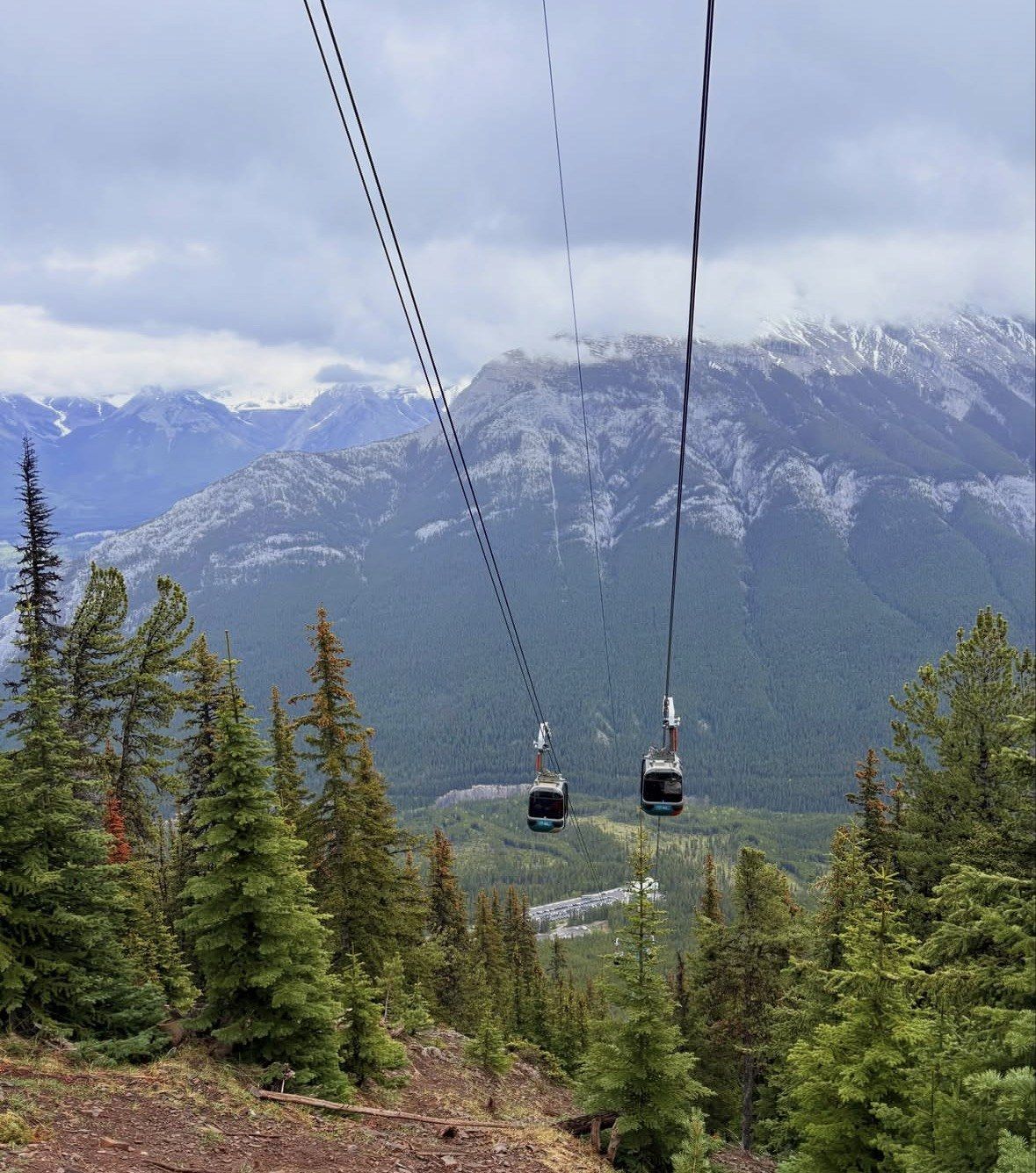
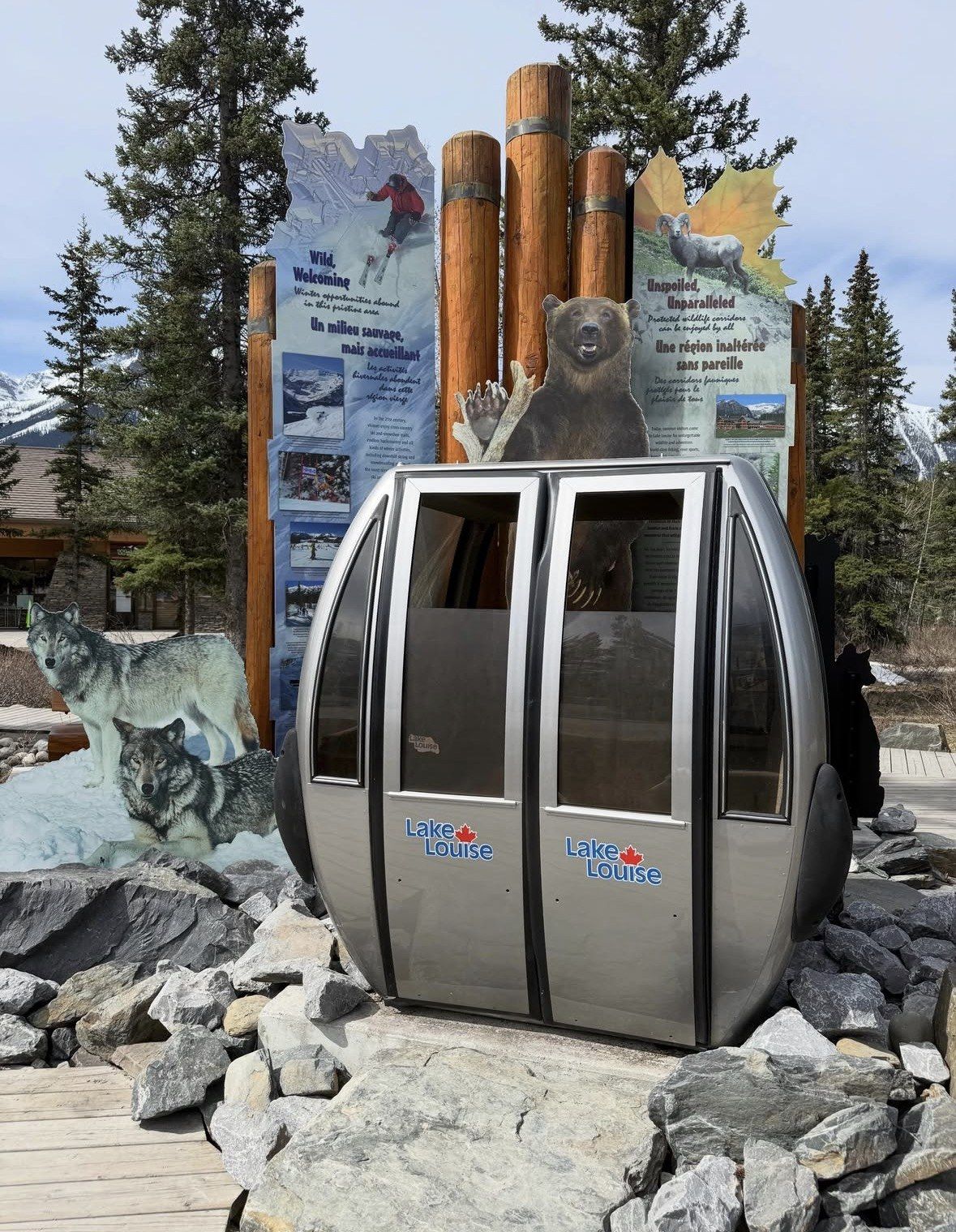
Above the valley, the ski area added a second way to look at the range. The summer sightseeing gondola ran daily 9:00 am to 4:30 pm from June 5 to October 11, 2026, carrying riders to 2,101 m, with the Wildlife Interpretive Centre in Whitehorn Lodge a short walk from the top station and included with a summer gondola ticket. That season has finished and the summer gondola is scheduled to return in spring 2027. Winter runs on different hours: lifts 9:30 am to 4:30 pm and the sightseeing gondola 10:30 am to 4:00 pm, conditions permitting, with the 2026-27 season opening tentatively on November 6. The resort tops out at 2,637 m with 991 m of vertical, 1,700 hectares, 170 named runs and 13 lifts.
Lake Louise Today
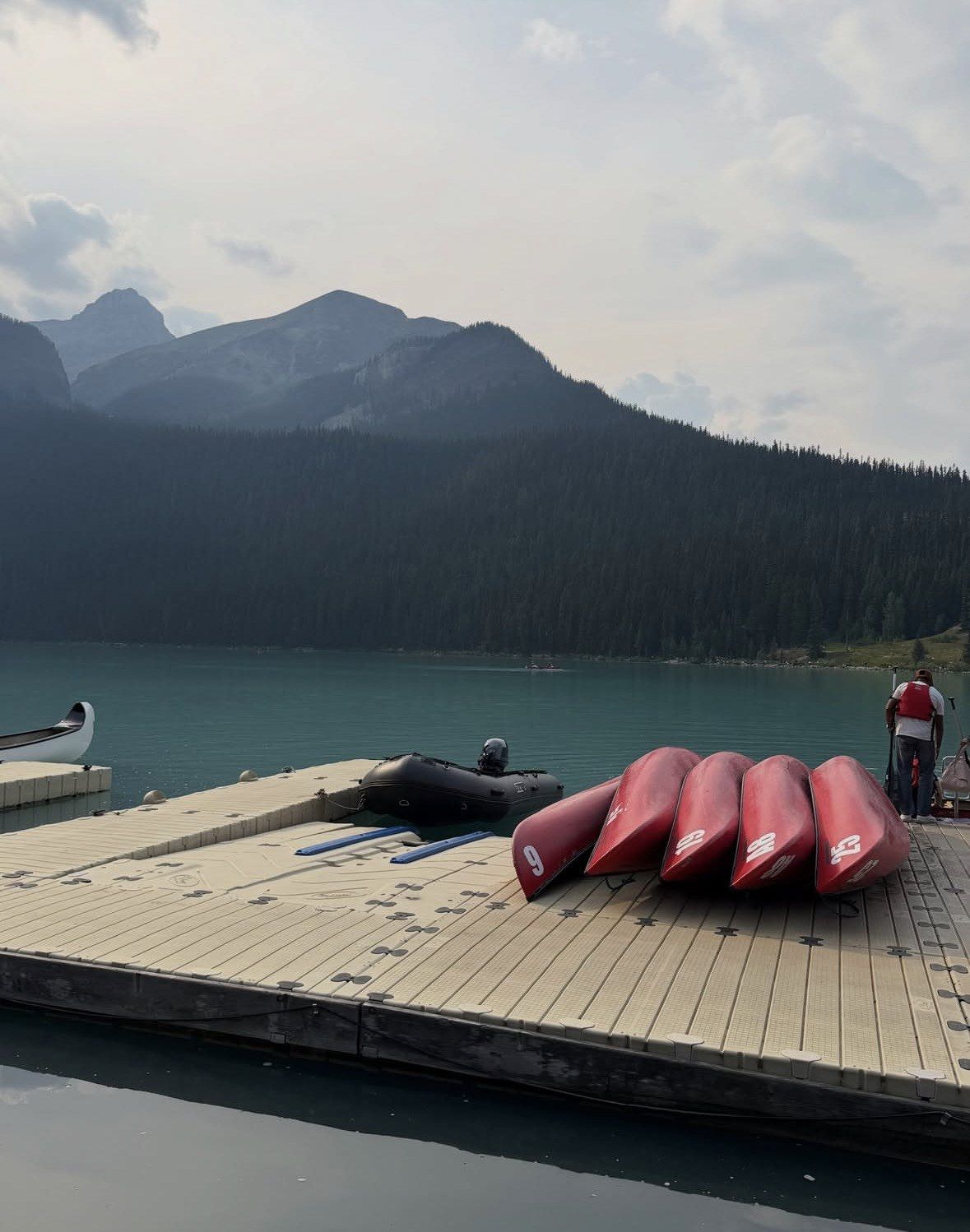
Lake Louise still runs a year that splits cleanly in two. It usually freezes solid around mid-December once temperatures stay below freezing, and the water normally begins to thaw only in early June, so a late-May visit can show white ice instead of turquoise. The lakeshore canoes from June through October, with the docks typically opening in mid-June, are run by Fairmont Chateau Lake Louise rather than by Parks Canada, as is the natural rink cut on the frozen lake and lit after dark for evening skating. Ice Magic returns to the Chateau from February 3 to 7, 2027, inside the wider SnowDays festival of January 21 to February 7; it is ticketed, there is no parking at the site, and ticket holders use the provided shuttle.
Crowds track the calendar closely. May to October is the peak summer season, the heaviest numbers run June through October, alpine hiking gets going in late June, and larch colour near Lake Louise peaks from the last week of September into the first week of October. July is the warmest month at the lake, averaging 21°C by day and 5°C overnight, while October drops to 8°C and -5°C. Wildlife rules apply throughout: stay at least 30 metres from deer, elk, sheep and moose, and 100 metres from bears, wolves, cougars and coyotes. A guided day trip from Calgary, Banff, Canmore or Vancouver handles the driving, the lake access and the timing of your arrival.