In shortWinter at Lake Louise means a frozen lake with a natural rink run by the Fairmont Chateau Lake Louise and lit for evening skating, sleigh rides along the shoreline, dog sledding down in the valley and cross-country trails from November 1 to April 30. Nothing stops you reaching the community or the lakeshore in any month; Moraine Lake has a window that runs only from early June to mid-October, and the teahouse hikes above the lake carry a Parks Canada warning from November through mid-May.
mid-Decemberlake usually freezes solid
-14 to -4 CJanuary range, Banff area
Nov 1 - Apr 30cross-country trail season
Feb 3-7, 2027Ice Magic at the Chateau
What stays open at the lake and what shuts
The community of Lake Louise and the lakeshore stay open year-round, and that one fact shapes the whole cold-month plan. Reaching it in January takes the same 62 km of road from Banff as in July, plus the final 4 km climb from the village up to the water; Roam Public Transit Route 8X is the service that does not pause for the season, running daily all year from downtown Banff through Lake Louise Village to the lakeshore, a trip Roam puts at about 1 hour 20 minutes. Paid lakeshore parking applied only inside the 2026 Parks Canada shuttle season, from May 15 to October 12.
Moraine Lake is the one that catches people out. Its access window on the Parks Canada listing closes in mid-October and does not reopen until early June, and personal vehicles are barred from Moraine Lake Road in every month of the year regardless: Parks Canada shuttles, licensed commercial operators, drivers holding an accessible placard and guests of Moraine Lake Lodge are the only traffic allowed. There is no winter workaround, so build a cold-season trip around Lake Louise alone.
- Closed November through May: both teahouses above the lake, and the lakeshore canoe rental
- Closed to personal vehicles all year: Moraine Lake Road, with access only in its June to mid-October window
- Finished for the year: the summer sightseeing gondola to 2,101 m, scheduled to return in spring 2027
- Running all winter: Roam Route 8X daily, and the Lake Louise Visitor Centre beside Samson Mall at 201 Village Road, 9 am to 5 pm most of the year and closed December 25
- A park pass is required, and it is charged separately from transport fares and from most tour prices
When the ice forms and when it goes out
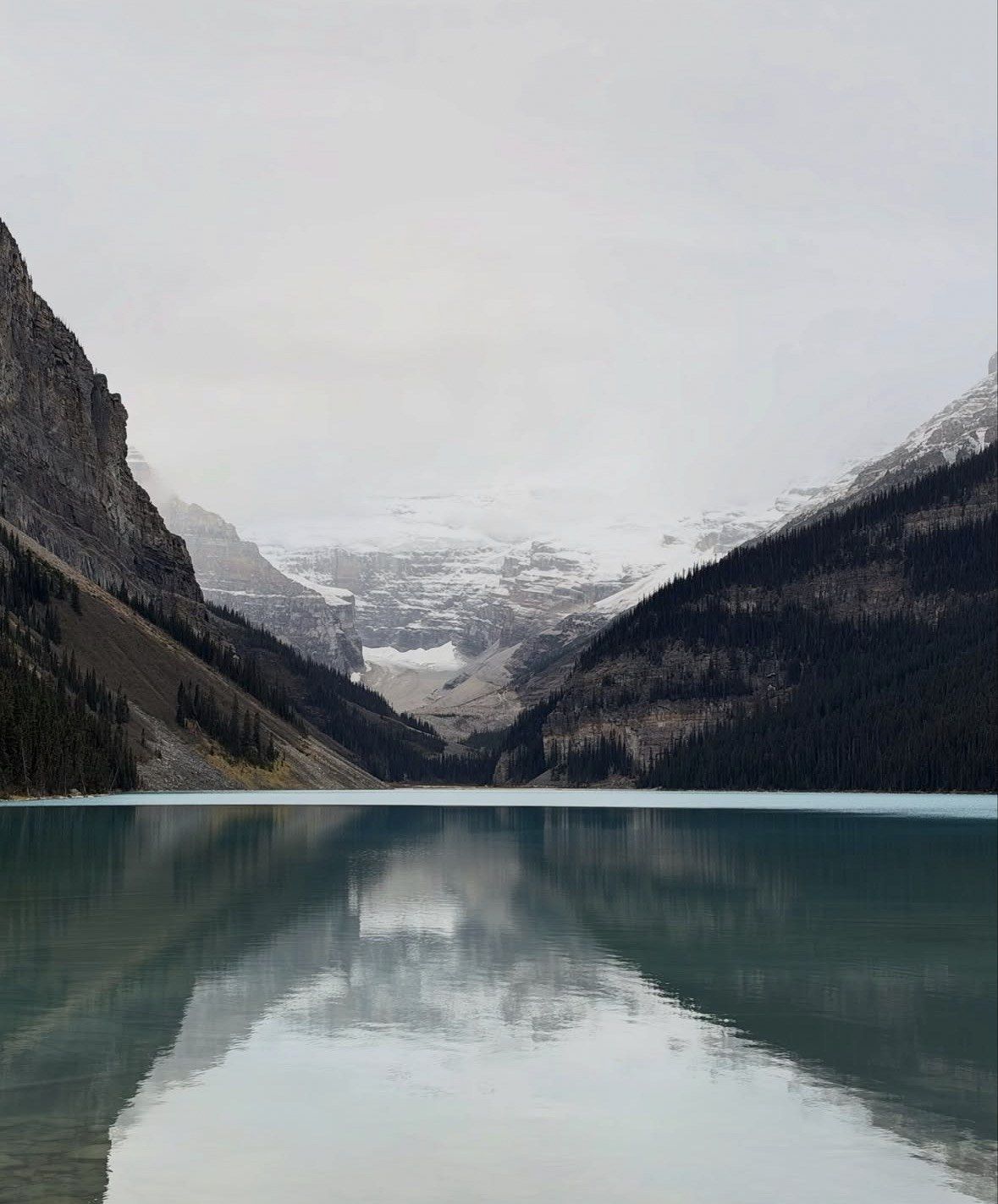
Mid-December is the usual point at which the whole lake sets solid, according to the Fairmont Chateau Lake Louise, and it takes a run of days that stay below freezing to get there. Lakes this high up, Lake Louise among them, then hold their ice for months and usually begin to thaw in early June, so a visit in late April or May can put you in front of a white surface instead of turquoise water.
Opening and closing dates for the rink are not published in advance on the official pages, and neither are skate hire details, so confirm both before you build an afternoon around skating. Snowfall in the area is described only in general terms: large amounts on the peaks and ski hills, a moderate amount in the town of Banff and a little more in the hamlet of Lake Louise.
Lake Louise ice skating, sleigh rides and dog sledding
Skating is the activity worth planning the day around. The rink on the frozen lake is maintained by the Fairmont Chateau Lake Louise rather than by Parks Canada, and Banff & Lake Louise Tourism highlights evening skating, with the rink lit after dark. It is the one thing at the lake that still works once the light has gone, which counts for a good deal in a month when the ski lifts shut at 4:30 pm.
Horse-drawn sleigh rides run along the shoreline through the cold months, operated by private companies based at the lake, so check what is running on your dates and book direct with them. Dog sledding happens down in the valley instead of at the lakeshore, and the teams sit far enough from the water that one run plus the driving takes most of a half day. Dogs are banned on certain cross-country tracks around Lake Louise.
Stacking all three into one day does not work in midwinter. Take skating plus one other outing, and leave the lit rink until last.
Coming from Vancouver instead of Alberta
This 4-day coach trip from Vancouver covers the long mountain transfer, three nights of hotels including one night in downtown Banff, and seasonal Moraine Lake admission, so a cold-month visitor with no Alberta flight still gets time at Lake Louise.
★ 4.9/5 · 219 reviews
Walking on snow above the lake
November through mid-May is the stretch Parks Canada identifies as unsafe for the teahouse hikes, the reason being avalanche risk, and it adds that a signposted winter route is not automatically a safe one. Treat both statements as hard rules. The Lake Agnes and Plain of Six Glaciers trails are out of season, the teahouses themselves are listed closed November through May, and the climbs that fill a summer day are off the table.
Flat ground is what stays reasonable. The shoreline path along the lake, which is about 2.4 km long, is the walk most winter visitors do, on packed snow and best done in grippy footwear. Cross-country ski trails at Lake Louise operate from November 1 to April 30, and snowshoe routes work on the low valley trails rather than the avalanche slopes above the water.
For an ice walk, Johnston Canyon is 34 km from Lake Louise, and guided ice walks run there from November to April on steel catwalks, quoted in winter conditions at 2.5 km return to the Lower Falls and 5 km return to the Upper Falls. Rock slope remediation has shut the trail to the Lower and Upper Falls viewpoints as of October 13, 2026, which this winter means approaching by the Moose Meadows Trail if the Upper Falls or the Ink Pots are what you came for; confirm the status before you make the drive. Two year-round options sit within reach as well: the Peyto Lake lookout, quoted in winter at 1.5 km return with 25 m of gain and about 45 minutes, and Emerald Lake, 39 km away on a road that stays open all year.
Cold, daylight and what to wear
Nothing in the Banff and Lake Louise area gets colder than January, which averages lows of -15 C and has a recorded reading of -30 C behind it. Dress for standing around in wind, because skating, watching the sleighs and waiting for a bus all mean long static spells in air coming straight off the ice.
Daylight is the other constraint. Lift hours mark out the practical bracket: 9:30 am to 4:30 pm for the Lake Louise lifts and 10:30 am to 4:00 pm for the sightseeing gondola, conditions permitting, and a December or January afternoon runs out at much the same time. Do everything that needs light first, and keep the lit rink for the end of the day.
- Layers under a windproof shell, with a hat and a second pair of gloves, since the first pair gets wet on the ice
- Insulated boots with real grip, plus cleats or crampons for packed snow and ice; cleats can be rented for the Johnston Canyon walk
- Sunglasses or goggles for the glare off the snow
- A thermos, since nothing is open on the trails above the lake between November and May
- A plan for arriving back after dark, including how you cover the 4 km down to the village
| Month | Area temperature range | What is running |
|---|
| November | -8 to 1 C | Cross-country trails from November 1; ski season opened November 6, conditions permitting; ice not yet reliable |
|---|
| December | -14 to -5 C | Lake usually freezes solid around mid-December; Visitor Centre closed December 25 |
|---|
| January | -14 to -4 C | Coldest month, average lows -15 C; SnowDays starts January 21, 2027 |
|---|
| February | -12 to 0 C | Ice Magic at the Chateau, February 3-7, 2027; SnowDays runs to February 7 |
|---|
| March | -8 to 4 C | Skiing continues; teahouse routes stay unsafe through mid-May; grizzlies leave dens from late March |
|---|
Which winter day to build around
Pick one of three shapes and the rest of the day falls into place. A skating day means arriving in the early afternoon, walking part of the shoreline while the light holds, then going out on the ice once the lamps are on. A ski day means the resort across the valley, where the 2026-27 season opened tentatively on November 6 and season passes are valid to May 2, 2027; the ski page on this site covers the lift hours and the mountain's 170 runs and 13 lifts.
A festival day is the third option, and it exists for a few dates only. Ice Magic is staged at the Fairmont Chateau Lake Louise from February 3 to 7, 2027, inside the wider SnowDays festival that runs January 21 to February 7, 2027. Tickets are required for the 2027 edition, the site has no parking at all so the provided shuttle is how every ticket holder gets in, and extreme weather can change the programme or call it off. The ice festival page on this site has the detail, down to the ice castle that needs ice 16 to 18 inches thick.
Whichever you choose, do not try to pair a festival evening with a full ski day or a long valley outing. Winter afternoons at 1,731 m are short, and the drive back down to Banff is 62 km.
Questions people ask
Can I visit Moraine Lake in winter?
No. The Parks Canada access window for Moraine Lake shuts in mid-October and does not open again until early June, and personal vehicles are kept off Moraine Lake Road in every month. Only Parks Canada shuttles, licensed commercial operators, accessible-placard holders and Moraine Lake Lodge guests may use the road, and the shuttles do not run in the cold months. Plan a winter trip around Lake Louise.
How thick does the ice on Lake Louise get?
Once the cold settles in and temperatures hold below freezing, the lake normally sets solid by about mid-December. As a benchmark, the ice castle built on the lake for Ice Magic needs ice at least 16 to 18 inches thick. Conditions at the lake are managed by the Fairmont Chateau Lake Louise, which maintains the rink.
Is the gondola open in winter?
Winter operating hours at the ski resort are 9:30 am to 4:30 pm for the lifts, with the sightseeing gondola on a shorter 10:30 am to 4:00 pm day, conditions permitting. The summer sightseeing operation that carries riders to 2,101 m is done for this year, with a return scheduled for spring 2027. Check the operator's hours on the day, since weather closes lifts.
Do I still need a park pass for a winter visit?
Yes. Admission to Banff National Park is required to stop and visit, and it is charged separately from any transport fare. Driving straight through the parks without stopping does not call for one, though that exemption drops away on the Icefields Parkway (93N) and the Bow Valley Parkway (1A).
What about driving the Icefields Parkway in winter?
From November 1 until March 31, and at any other time the surface is snow or ice covered, you need snow tires or chains to drive the Icefields Parkway. There are no services at all over the 230 km between Jasper and Lake Louise in winter, snowplows run only between 7 am and 3:30 pm, and the route has no cell coverage. Peyto Lake, 46 km from Lake Louise, is the realistic winter stop.
Read also